Custom-Color and Two-Color Pickleballs: Planning a Color Program for Brands
Plan custom-color and two-color pickleball programs: color references, sample approval, batch consistency and reorder controls for OEM lines.
Color is one of the first things a pickleball buyer notices and one of the last things factories control well. A club wants a ball that reads on its courts; a brand wants a colorway that matches its identity; a retailer wants a shelf that looks like a family. Turning those wishes into production is a program — with color references, samples, tolerances and reorder controls — not a single order line.
This guide covers how to plan custom-color and two-color pickleball programs: what to decide first, how color is approved, and how to keep color consistent across batches and reorders.
Quick answer: what does a color program need?
Five things: a color reference both sides can see, a physical sample approved in the intended material, an agreed tolerance for batch variation, a written record tying the color to the model and batch, and a reorder rule that keeps the same reference alive. Skip any one of them and “the same blue” becomes a different blue six months later.
Start from the standard range, then customize
Production color programs usually begin with the factory’s standard range and extend from there:
- Injection-molded balls are commonly produced in yellow, green and orange, with other colors available by arrangement;
- Rotomolded 40-hole and injection-molded 48-hole balls support broader color programs — the 48-hole ball is available for bulk production with all colors customizable for OEM projects;
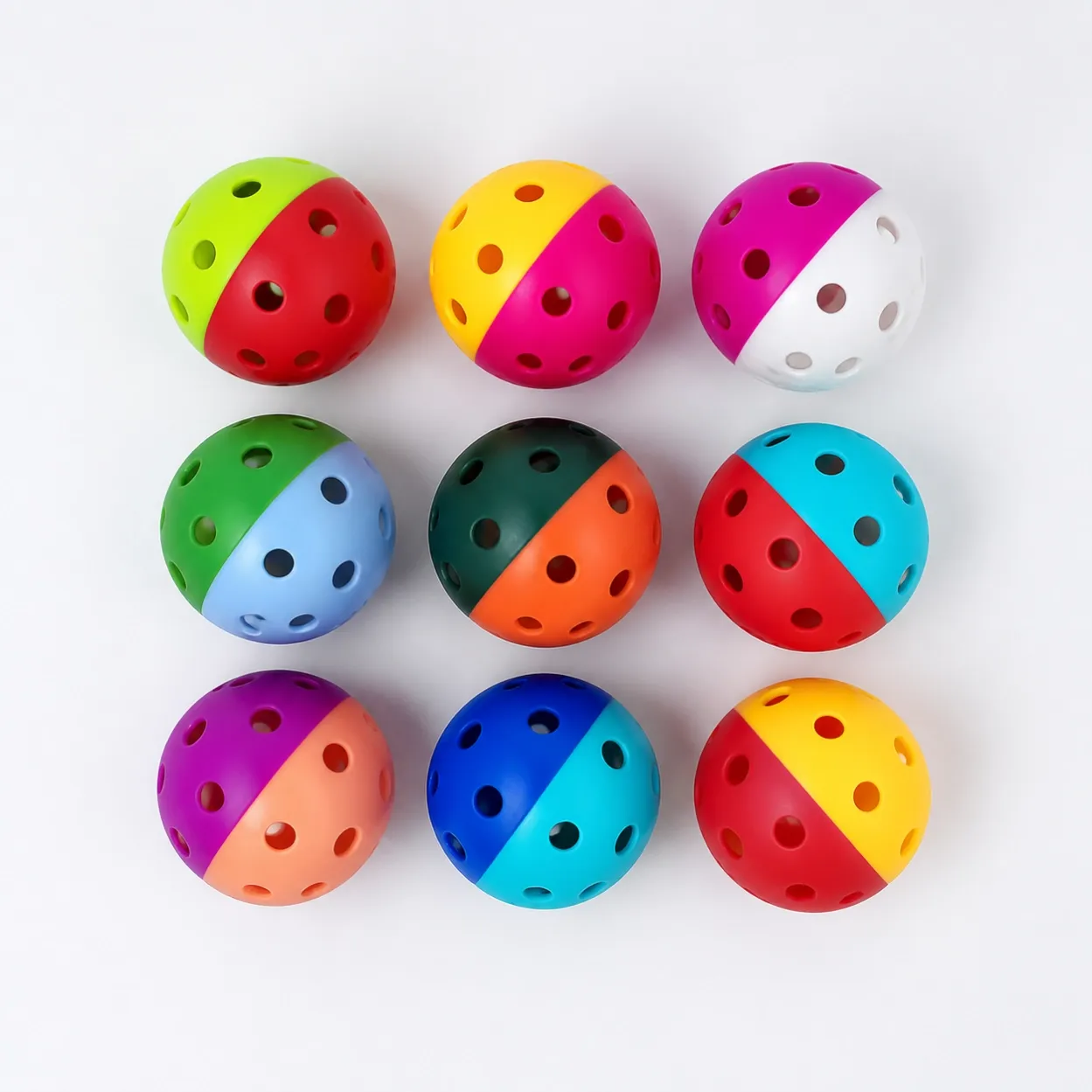
- Two-color designs divide the ball into split colorways, a common choice for retail families, event editions and club identity;
- Marbled patterns are a separate decorative route for recreational and promotional programs.
Decide the role of color first: is it a full product line (multiple SKUs across colorways), a seasonal edition, or a single signature color? The answer sets the quantity per color and therefore what is practical to produce.
The color approval workflow
- Reference: provide the color as a reference both sides can interpret — a physical swatch, an approved previous batch, or a code system agreed in writing;
- Sample: the factory produces the color in the actual ball model and material — color behaves differently on different surfaces, so approve the real thing, not a flat swatch alone;
- Approval: judge the sample under agreed lighting conditions and record the decision with photos and the sample ID;
- Batch record: tie the approved color to the model, batch code and reference sample (see our batch traceability guide);
- Reorder rule: for repeat orders, compare against the retained approved sample — not against memory or a phone photo.
Managing batch color variation
Plastic color is a process, and small variation between batches is normal. The program question is how much variation is acceptable for the product’s use:
- Agree an acceptance rule in writing before production, judged against the approved sample;
- Compare under consistent lighting — color decisions under mixed light are unreliable;
- For multi-color families, approve the set together so the colors relate correctly to each other;
- Keep the retained sample and record per colorway, so a future batch can be checked against the right reference.
Color, visibility and play: keep claims honest
Color choices are often discussed in terms of visibility on court. Court surface, background, lighting and time of day all interact with the ball color, and preferences differ between players. Our color and court contrast guide covers how to run a practical visibility evaluation; the results belong to your courts and your players, not to a universal rule.
Packaging and branding alongside color
Color programs usually ship with branding: a printed logo on the ball, a color-matched tube or gift box, and a retail pack that presents the family. Plan printing and packaging together with the color approval — logo printing requirements are covered in our custom logo guide, and retail packaging options in the storage tube guide.
Frequently Asked Questions
Can SYNLY produce custom colors on all ball models?
Color feasibility depends on the model and material. The 48-hole ball is available for bulk production with all colors customizable for OEM projects; other models support color programs within their production range. Confirm the target color with the specific model when requesting the quotation.
Can we order a two-color ball design?
Split two-color designs are part of the reference range and can be discussed for OEM projects. Provide the color pair and the intended use, and approve a physical sample of the exact model before bulk production.
How do we keep color consistent between reorders?
Retain the approved sample and tie it to a written color reference and batch record. Compare future batches against that sample under consistent lighting, and treat any reference change as a new approval.
Does a brighter color mean better visibility?
Not universally — visibility depends on the court, background and lighting at your venue. Evaluate candidate colors on your own courts with your players before committing to a large color program.
Can color programs include printed logos and custom packaging?
Yes — color, logo printing and packaging are commonly planned as one program. Approve each element on a physical sample and confirm MOQ per element in the quotation.
Request a Color Program Quotation
Send the target models, color references (swatches or previous samples), the role of the program (line, seasonal edition or single color), quantities per colorway, and any printing or packaging needs. SYNLY can then propose a sample plan and confirm production feasibility per color.
Email: parry@synlypickleball.com
WhatsApp: +86 15067540770
Related: Custom-color PE pickleball · 48-hole color program · Color and court contrast guide · Batch traceability guide · Custom logo printing guide · Browse SYNLY products