Sep 20, 2026Pickleball Innovation
Pickleball Color and Court Contrast: A Visibility Guide for Clubs
Compare fluorescent yellow, orange and Tiffany-style blue 48-hole pickleballs, and learn how court color, background and lighting may affect visibility.
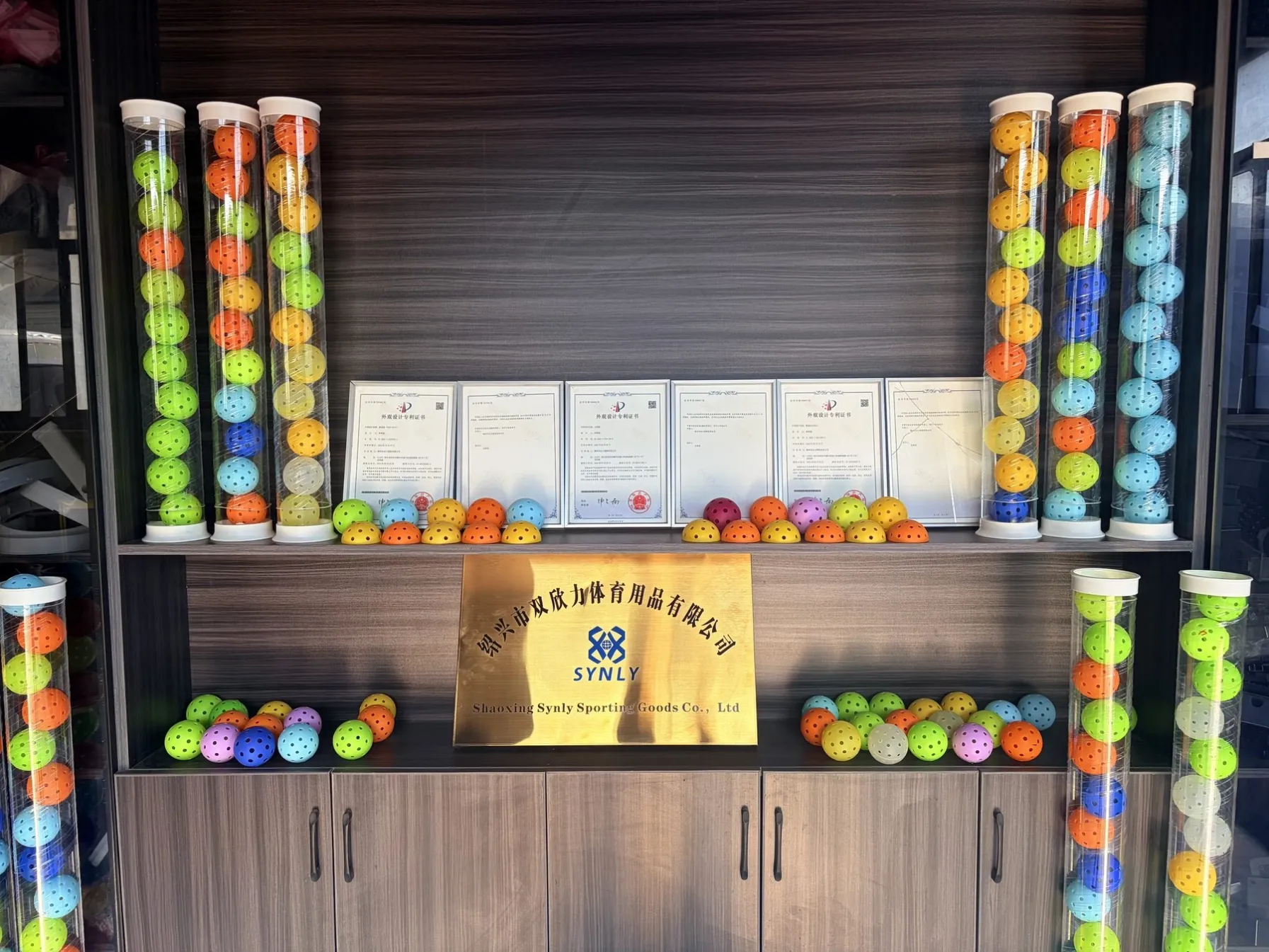
There may not be one pickleball color that is easiest for every player to see. During our recent testing of 48-hole pickleballs, we prepared three colors: fluorescent yellow, fluorescent orange and a light turquoise color often described as Tiffany-style blue. Different testers said different colors felt more comfortable to track.
That feedback raised a useful question: does the best pickleball color depend partly on the color of the court and its surroundings?
Our current observation is not a scientific conclusion. It is a practical hypothesis worth testing. A ball may be easier to follow when it creates stronger visual contrast with the court surface, walls, fencing, lighting, sky and other backgrounds that appear during a rally.
Is there one best pickleball color for visibility?
No single color can be assumed to be best for every court or player. Fluorescent yellow may be highly visible on one venue, while fluorescent orange or light blue may stand out better on another. Personal vision, lighting, ball speed and the backgrounds behind the ball can also affect what feels comfortable.
The most useful approach is to compare color samples on the actual court where the ball will be used.
What did we observe with three 48-hole colors?
We tested 48-hole pickleball samples in fluorescent yellow, fluorescent orange and Tiffany-style light blue. The construction was intended to let testers compare the color experience, but the feedback was not identical.
Some testers preferred fluorescent yellow. Some found fluorescent orange easier or more comfortable to track. Others preferred the separation created by the light blue sample.
This does not prove that one color performs better. It suggests that color selection should not be based only on a catalog photo or a general assumption that the brightest color is always the easiest to see.
Why can the court and background matter?
During play, the ball does not remain against one background. A player may see it against the court surface, the non-volley zone, boundary lines, fencing, walls, spectator clothing, trees, the sky or indoor lighting.
If the ball is close in color or brightness to one of those backgrounds, it may be harder for some players to separate visually. A contrasting color may be easier to locate, especially during fast exchanges. However, color contrast and light-versus-dark contrast are not exactly the same, so a useful test should consider both hue and brightness.
For example, a fluorescent yellow ball may stand out clearly against a dark blue or red background but may feel less distinct near a yellow-green wall or bright outdoor vegetation. An orange ball may separate well from a blue court yet become less comfortable under warm indoor lighting. A light blue ball may contrast with some green or red surfaces but may be harder to follow against sky or similarly colored walls. These are test questions, not universal rules.
How should a club or buyer compare ball colors?
- Keep the product specification consistent. Compare balls with the same hole pattern, material, dimensions, weight target and production process whenever possible.
- Test on the intended court. Record the court surface color, non-volley-zone color, surrounding walls or fencing and whether the session is indoors or outdoors.
- Repeat under different lighting. Test in daylight, shade, evening light or the indoor lighting conditions that players normally use.
- Use coded samples. Label the samples A, B and C instead of telling testers which color is expected to perform best.
- Separate visibility from ball performance. Record visibility separately from bounce, speed, sound, roundness and durability.
- Collect comments from more than one player. Age, vision, eyewear and personal experience can affect perception.
A practical color-test record
For each session, record the court and background colors, indoor or outdoor setting, time and lighting, sample code, hole count, visibility during different shots, moments when the ball was difficult to track, tester comments, and separate notes for bounce, flight, roundness and durability.
Repeating the same comparison on a second court can show whether the preference follows the player or changes with the venue.
Can SYNLY customize pickleball colors and hole patterns?
SYNLY can discuss custom colors for different pickleball structures, including 26-hole, 40-hole and 48-hole options. Our 48-hole pickleball is available for bulk production, and color customization can be developed according to the approved sample and final order specification.
Buyers should provide a physical reference, Pantone or other agreed color standard when possible. A color displayed on a phone or computer is not a reliable production reference. Pigment, material, wall thickness, surface texture and lighting can all influence the final appearance, so color samples should be approved before bulk production.
MOQ, color matching, logo, packaging, performance targets and lead time must be confirmed for each project.
Does a custom color make a ball approved for tournament play?
No. Color customization does not create tournament approval. USA Pickleball's published equipment standards describe approved-ball requirements that include a minimum of 26 and a maximum of 40 circular holes. A 48-hole model should therefore not be presented as a USA Pickleball-approved competition ball unless the governing requirements and the specific model's status change and can be verified.
The 48-hole ball can be evaluated for development, practice, recreation, club testing or other uses accepted by the organizer. For a sanctioned event, the organizer should verify the current approved-ball list and the exact model before use.
What should an OEM buyer request before choosing a color?
Ask for the exact hole pattern and construction, a labeled physical color sample, the agreed color reference and tolerance, samples from the intended material and process, a court-visibility test on the target venue, written approval records for color, logo and packaging, and confirmation of MOQ, lead time and batch consistency controls.
The goal is not simply to select the brightest color. It is to select a color that fits the intended court, users, lighting, brand and product specification.
Frequently Asked Questions
Is fluorescent yellow always the easiest pickleball color to see?
Not necessarily. It is widely used and may be highly visible in many settings, but the court, surrounding background, lighting and individual player can change the result.
Why might one player prefer orange and another prefer blue?
Players may experience differences in color contrast, brightness contrast, lighting, eyewear and visual perception. Preference can also be influenced by the backgrounds behind the ball during play.
Should color tests use balls with the same specification?
Yes. Keep the hole pattern, material, dimensions, weight target and process as consistent as possible so that performance differences do not distort color feedback.
Can 26-hole, 40-hole and 48-hole pickleballs use custom colors?
SYNLY can discuss custom colors across these hole-count options, subject to material, process, sample approval, MOQ and final specifications.
Is the SYNLY 48-hole ball available for bulk production?
Yes. The SYNLY 48-hole ball is available for bulk production, and different colors can be customized after sample and specification approval. It is not currently represented as USA Pickleball approved.
What color reference should a buyer provide?
A physical sample plus an agreed Pantone or similar reference is preferable. Screen images alone are not reliable because displays and lighting can change the apparent color.
Request a custom color sample plan
Choosing a pickleball color is not only a branding decision. It can also be a court-visibility question. Tell SYNLY about your court surface, lighting, hole pattern and target users, and we can discuss a color-sample plan for your OEM project.
Related reading:
https://synlypickleball.com/products/48-hole-climate-ready-pickleballhttps://synlypickleball.com/products/custom-color-74mm-pe-pickleballhttps://synlypickleball.com/posts/pickleball-ball-sample-testing-oem-evaluationhttps://synlypickleball.com/posts/pickleball-batch-traceability-oem-reordershttps://synlypickleball.com/contact-us