Aug 4, 2026
How Many Pickleballs Does a Club Need? Inventory Planning Guide
Plan pickleball inventory by courts, sessions, climate and event format. Estimate club stock, tournament reserves, replacements and OEM replenishment.
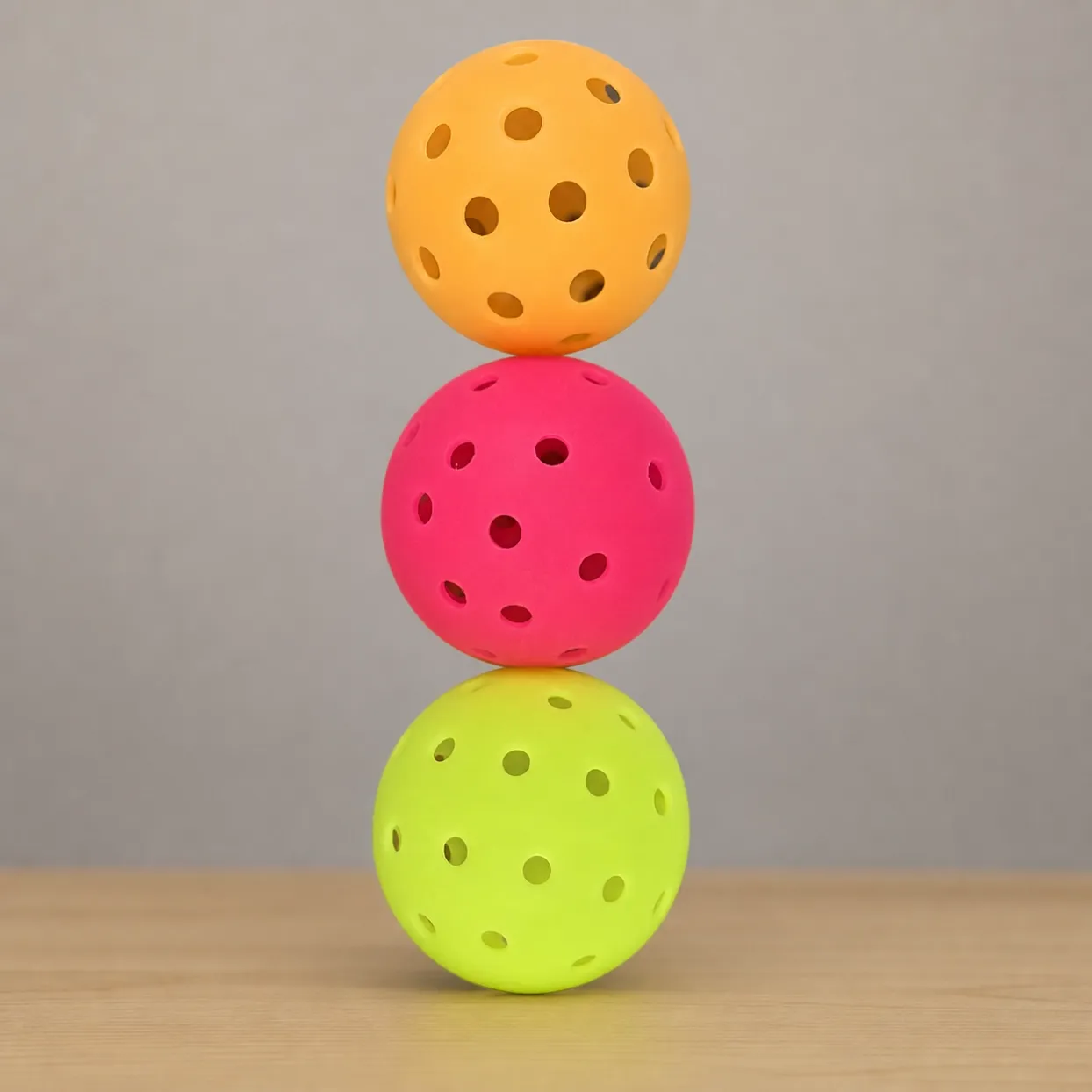
Updated August 2026. A club can have excellent courts and a full schedule but still create a poor player experience if it runs out of consistent balls. Too few balls slow down sessions. Too many mixed models create uneven bounce and flight. Poor storage increases cracking, warping and waste.
This guide gives club managers, coaches, tournament directors and recreation centers a practical way to plan pickleball inventory. The quantities below are planning starting points from an equipment-supply perspective, not official rules. Actual consumption depends on court count, playing hours, player level, temperature, surface and event format.
Quick answer: start with a simple inventory formula
Use four separate pools instead of one mixed box of balls:
- Court issue stock: balls available for daily open play.
- Central replacement reserve: clean, matched balls ready to replace cracked, warped or lost stock.
- Coaching and machine stock: a separate high-volume basket for drills and ball launchers.
- Event stock: sealed or controlled inventory reserved for leagues and tournaments.
A practical starting point for daily club play is 6–12 matched balls per active court, plus a replacement reserve. For a stable indoor program, a reserve equal to about 30–50% of court issue stock may be enough. Outdoor venues, high-level play and tournament operations often need a larger reserve because temperature, rough surfaces and ball loss increase risk.
These are operating estimates, not certification requirements. Track actual breakage and loss for four weeks, then adjust the reorder point using your own data.
Why one number does not fit every club
1. Court count and operating hours
An eight-court venue open all day needs more ready stock than an eight-court venue running two evening sessions. Count active court-hours, not only installed courts. A court used for coaching, beginner programs and league play may consume more balls than a court used for casual doubles.
2. Indoor, outdoor and quiet-play programs
Do not mix every ball into one inventory pool. Indoor balls, outdoor balls and quiet practice balls serve different conditions. Keep each type labeled by use case, purchase batch and date opened. This makes player feedback easier to diagnose and helps staff avoid using a soft practice ball in a competitive session.
For noise-sensitive locations, equipment selection is becoming a larger operational issue. USA Pickleball maintains information on its acoustics and noise-reduction program. Clubs should evaluate the complete environment—including balls, paddles, barriers and neighboring properties—rather than expecting one product to solve every sound concern.
3. Temperature and court surface
Cold conditions can make some polymer balls feel harder and more vulnerable to cracking. Heat can soften materials and change bounce or roundness. Rough outdoor surfaces also increase wear. Store backup inventory away from direct sunlight, heaters and vehicle trunks, and allow balls to reach playing temperature before evaluation.
When comparing suppliers, test the same model across the temperatures and surfaces used by your customers. Our guide to pickleball materials, molding and quality control explains why resin selection and process consistency matter.
4. Player level and session format
Advanced players hit harder and may expose durability or roundness problems faster. Beginner classes may lose more balls outside the court. Ball-machine drills need a large, uniform basket so feed behavior remains consistent. Keep coaching stock separate from match stock and retire damaged practice balls before they affect the machine or training quality.
A practical inventory example for an eight-court club
Assume a club operates eight active courts and chooses a target of eight ready balls per court:
- Eight courts × eight balls = 64 court-issue balls.
- A 50% central reserve = 32 replacement balls.
- One coaching or launcher basket = 100 practice balls.
- Total starting operational stock = 196 balls, rounded to 200 for easy packaging and counting.
This example does not include tournament stock. Event inventory should be planned separately according to the selected ball, match format, number of courts, schedule and replacement policy. A club with low breakage may reduce its reserve later; a cold-weather outdoor venue may increase it.
How to plan tournament ball inventory
Tournament directors should control four variables before ordering:
- Selected ball model: confirm the exact brand, model, color and approval status required by the event.
- Match schedule: calculate courts, daily match blocks and expected replacement frequency.
- Distribution method: decide whether referees, court monitors or a central desk issue replacements.
- Contingency stock: protect against weather changes, lost shipments, batch damage and unexpected schedule expansion.
For sanctioned competition, verify the current model directly on the USA Pickleball Approved Ball List. Do not rely only on a marketplace description or an old package image.
Important certification note: 26, 40 and 48 holes are not interchangeable claims
The current USA Pickleball Equipment Standards Manual specifies a ball design with a minimum of 26 and a maximum of 40 circular holes. That means a 48-hole concept is not currently eligible to be represented as a USA Pickleball-approved competition ball under that hole-count requirement.
SYNLY is developing a 48-hole concept as an R&D project focused on durability, bounce and climate stability. It should be discussed as a development or non-sanctioned application unless the governing standard changes. For brands seeking competition approval, a compliant 26-hole or 40-hole design must be developed, tested and submitted through the official process. See the official equipment standards manual for current requirements.
This distinction matters for buyers: certification is tied to the submitted model, not simply to the factory. A factory can support material development, tooling, quality control and test preparation, but the final product still needs to meet the applicable standard and approval process.
Set a reorder point before stock becomes urgent
Use a simple weekly inventory routine:
- Count unopened stock, court stock, coaching stock and rejected balls separately.
- Record cracked, warped, soft, discolored and lost balls by model and batch.
- Calculate average weekly consumption over at least four weeks.
- Set a reorder point that covers supplier lead time, shipping time and a safety buffer.
- Increase the buffer before tournaments, festivals, seasonal peaks or extreme weather.
Reorder point = average weekly consumption × total replenishment lead time + safety stock.
For imported OEM orders, include production, packaging, export documentation, ocean or air transport and customs clearance in the lead-time calculation. SYNLY's team can help buyers compare shipping routes and packaging quantities to reduce urgent freight costs.
Quality checks when new balls arrive
Do not send every carton directly to the courts. Sample each production batch and check:
- model, color, logo and packaging accuracy;
- visible seams, flash, dents, incomplete holes or contamination;
- roundness and consistent weight;
- bounce consistency at a controlled temperature;
- flight stability during a short court trial;
- carton count and batch identification.
Keep a retained sample from each batch. If a club later reports a problem, the retained ball gives the supplier and buyer a common reference for investigation.
How OEM packaging can simplify club operations
Bulk purchasing does not have to mean one unorganized carton. A manufacturer can support club-ready packaging such as:
- small tubes for court issue;
- color-coded indoor, outdoor or program stock;
- batch labels and opening dates;
- club logos or event branding;
- coach baskets and launcher quantities;
- replacement cartons sized for monthly consumption.
Explore SYNLY's pickleball products and training equipment, our custom product solutions, and the related guide to equipment challenges for clubs, tournaments and festivals.
FAQ
How many pickleballs should a club keep per court?
A practical starting point is 6–12 matched balls per active court, plus a central reserve. Track actual weekly breakage and loss, then adjust for player level, operating hours, surface and climate.
Should practice balls and tournament balls be stored together?
No. Separate court stock, coaching or launcher stock, and controlled event stock. This reduces accidental mixing and makes quality and consumption easier to measure.
How often should a club replace pickleballs?
Replace a ball when cracks, warping, softness, surface damage or unstable flight affect play. A fixed calendar interval is less useful than inspection and batch-level consumption records.
Do tournaments need USA Pickleball-approved balls?
Requirements depend on the event. For USA Pickleball-sanctioned competition, verify the selected model on the current official approved ball list and follow the event's rules.
Can a 48-hole pickleball receive USA Pickleball approval?
Under the current equipment standard specifying 26–40 circular holes, a 48-hole design does not meet that hole-count requirement. It should be positioned as an R&D or non-sanctioned product unless the standard changes.
Can SYNLY customize quantities, colors, logos and packaging?
Yes. Project feasibility depends on the product, order quantity, tooling, printing and packaging requirements. SYNLY supports OEM/ODM discussion from concept and prototype through production and export coordination.
Build an inventory plan around your real operation
The best quantity is not a universal carton count. It is a repeatable system built around courts, programs, climate, match requirements and replenishment time. Share your court count, schedule, ball type, packaging preference and target market with SYNLY. We can help turn those operating requirements into a practical OEM supply plan.