Aug 3, 2026
7 Equipment Challenges Pickleball Clubs, Tournaments and Festivals Must Solve in 2026
Noise, approvals, weather, replacement stock, merchandise, beginner programs and delivery can make or break an event. This guide turns seven challenges into practical manufacturing solutions.
Running a pickleball club, tournament or festival is no longer simply a matter of booking courts and buying a few cartons of balls. Organizers now have to consider neighbors, equipment rules, weather, player experience, sponsor visibility, replacement stock and international delivery—often against a fixed event date.
The strongest events treat equipment as part of the operating plan, not as a last-minute purchase.
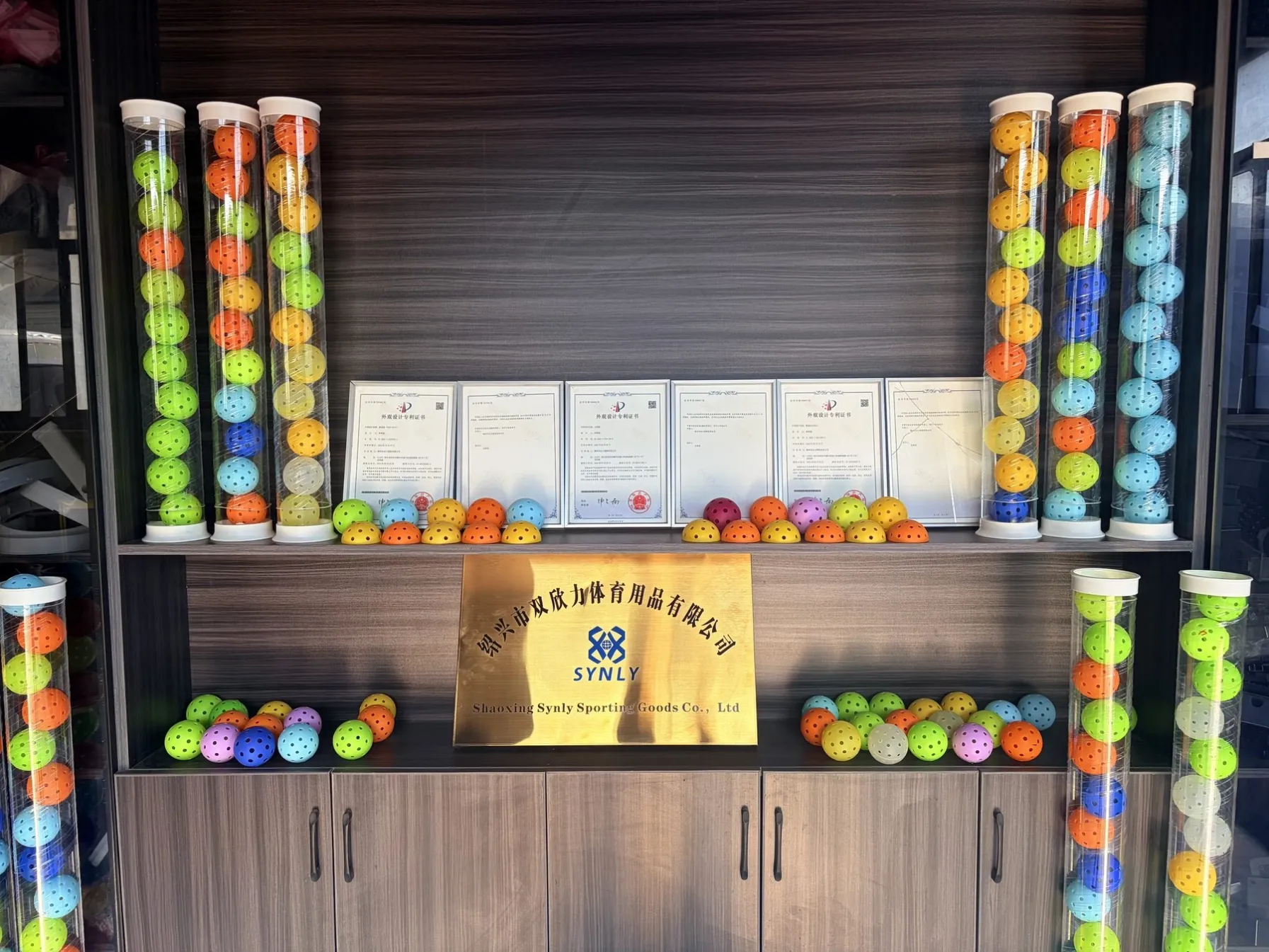
At Synly, we look at these challenges from a manufacturing perspective. With 30 years of injection-molding experience, we help buyers turn an event requirement into a practical product specification, prototype, production plan and delivery schedule. The following seven issues are among the most important questions for overseas clubs, tournament directors, promotion centers and festival organizers in 2026.
- How Can Clubs Grow Without Creating a Noise Conflict?
Noise is now a facility-planning issue. Repeated paddle-and-ball impact can affect the relationship between a club and the surrounding community, especially at outdoor courts near homes, hotels or mixed-use developments.
USA Pickleball's acoustics program now distinguishes between Quiet Category and Noise-Reduced Category products. That is a useful signal for facility operators: noise management may involve the ball, the paddle, acoustic barriers, court positioning, operating hours and player behavior—not one product alone.
A practical solution
Divide the playing program by use case:
- Use regulation equipment for competition and match simulation.
- Use quieter practice balls for warm-ups, beginner drills and noise-sensitive time periods.
- Schedule high-impact play away from the most sensitive hours.
- Evaluate acoustic screens or facility materials where equipment changes alone are insufficient.
- Communicate the noise-management policy to members and neighbors.
Synly can develop and customize quiet practice products for training programs, including PU foam practice balls. These products should not be presented as tournament balls, and they should not be described as officially “Quiet Category” or “Noise-Reduced Category” products unless they appear in the relevant official list.
Explore our quiet 40-hole PU foam practice pickleball for training and low-noise activity concepts.
- Is the Ball Eligible for the Intended Tournament?
For a recreational festival, organizers may have flexibility. For a sanctioned tournament, the rules are different. The USA Pickleball Tournament Director Checklist states that the tournament ball must be on the official approved ball list.
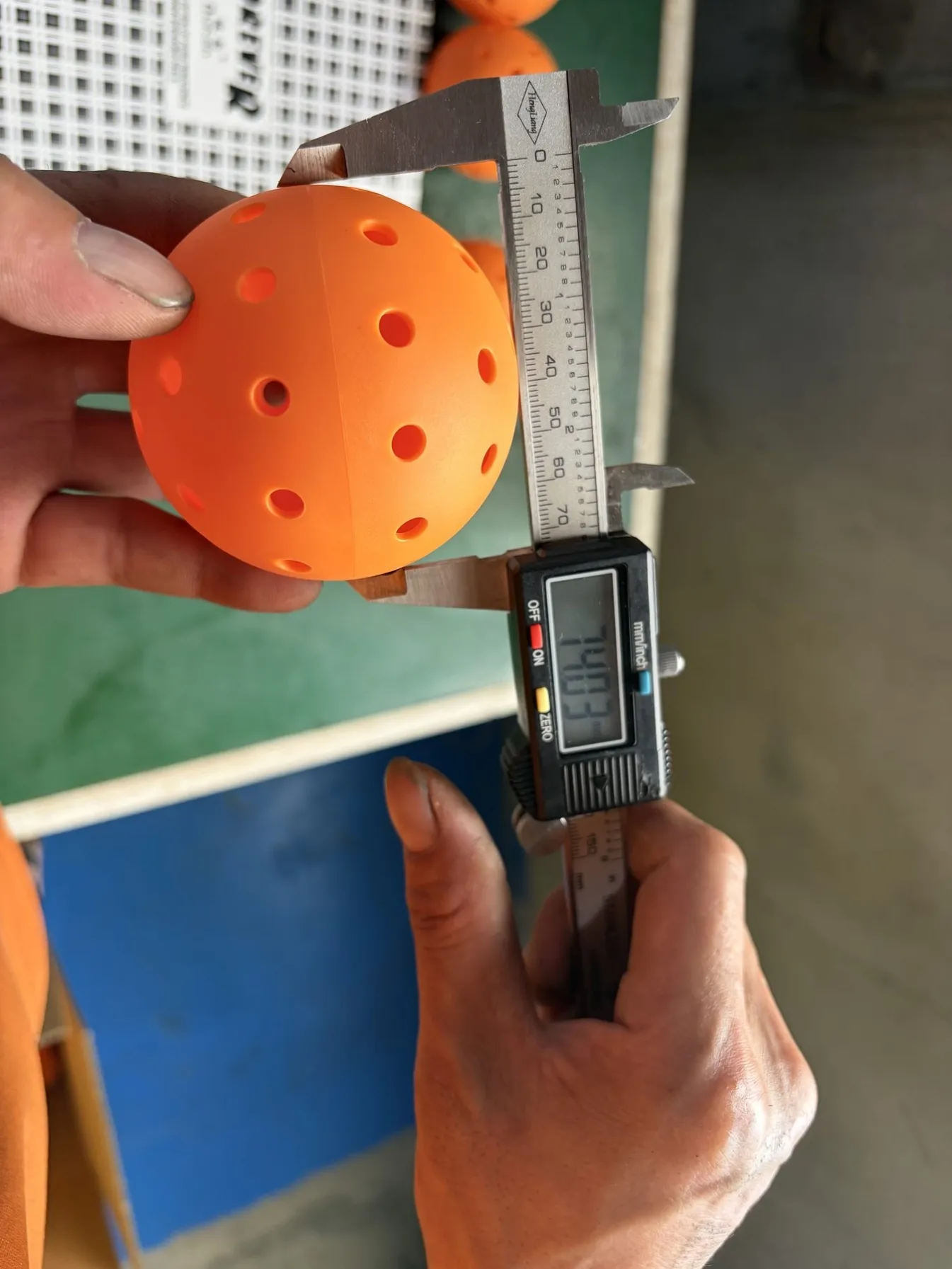
The USA Pickleball Equipment Standards Manual also defines measurable requirements for balls, including size, weight, roundness and bounce. A supplier's statement that a ball is “competition grade” is not the same as official approval.
A practical solution
Before ordering, the tournament director should ask four direct questions:
- Is this exact ball model currently listed by the governing body required for the event?
- Does the approval apply to the same construction and color being supplied?
- Can the factory provide batch identification and quality records?
- What replacement plan is available if a production batch or shipment is delayed?
Synly's development work includes dimensional, weight, roundness and bounce checks, followed by external testing and formal submission where required. We will identify a product's actual status clearly: development sample, internally tested model, submitted model or officially approved model. We will not claim official USA Pickleball approval before a product is listed by the official authority.
This distinction protects the organizer, the players and the credibility of the event.
- Will the Ball Remain Consistent in Heat, Cold and Repeated Play?
Tournament directors rarely hear complaints about a ball that performs correctly. They hear them when balls soften in heat, become brittle in cold conditions, wobble, crack early or vary from carton to carton.
Hole count alone does not determine quality. Material selection, wall structure, molding consistency, hole geometry and production control work together. In our experience, the material system is the starting point; process stability and quality control then protect that material performance during mass production.
A practical solution
Ask the supplier to match the ball to the environment and program:
- Indoor or outdoor court
- Expected temperature range
- Recreational, training or tournament use
- Required visibility and color
- Typical session length and replacement rate
- Storage and transportation conditions
Useful batch controls can include weight, diameter, roundness, visual hole inspection, bounce sampling and conditioned tests at relevant temperatures. The objective is not to promise that a plastic ball can never crack. It is to reduce variation, select a suitable material and document how the product was checked.
Synly is developing 26-hole, 40-hole and 48-hole ball concepts for different playing and product-development needs. Our 48-hole climate-ready pickleball is a development direction focused on durability, stable bounce and wider temperature performance. Any final performance or approval claim will be based on completed testing rather than the hole count alone.
- How Many Balls and Replacements Does an Event Really Need?
Event supply failures are often planning failures. A tournament may have enough balls for the opening matches but no controlled replacement stock. A festival may receive multiple colors or batches that look inconsistent in sponsor photos. A club may reorder too late and receive a slightly different version.
A practical solution
Build an event ball plan before production:
- Confirm the number of courts, event days and scheduled playing hours.
- Estimate the expected ball replacement rate using the actual climate and playing level.
- Separate match stock, warm-up stock and emergency reserve.
- Keep cartons traceable by model, color, production batch and quantity.
- Approve a pre-production sample before branded mass production.
- Agree on the final replenishment date, not only the first delivery date.
Synly can prepare event packs, mixed-carton plans, batch labels and backup quantities around the organizer's schedule. For multi-stop tours, the same approved artwork, material specification and packing standard can be maintained across planned production runs.
- How Can a Festival Create Value Beyond Court Registration?
The fastest-growing pickleball events increasingly combine play with community and culture. Current event formats include clinics, open play, music, food, vendor areas, sponsor activations, demonstrations and social experiences. World Pickleball Day encourages clubs of different sizes to organize introductory activities, while USA Pickleball's National Pickleball Month emphasizes clinics, open play and inclusive community events.
For organizers, this creates a second opportunity: products can extend the event experience before and after the matches.
A practical solution
Build merchandise around the audience journey:
- Participant welcome kits
- Limited-edition event balls
- Sponsor-branded practice balls
- Pickleball keychains, mascots and desk accessories
- Volunteer and staff packs
- Coach or VIP gift boxes
- Retail-ready souvenirs for club shops
- Children's activity items and beginner packs
These are not simply logo-printing projects. Each item needs a defined audience, use case, material, packaging, target price and compliance route. A keychain for adults, a toy-like mascot for children and a pet product may look similar but can fall under different safety requirements in the destination market.
Our Custom Pickleball Products & Cultural Merchandise service helps clubs, brands and organizers move from an idea to a prototype, mold, packaging and mass production plan.
- How Can Clubs Welcome Beginners Without Disrupting Regular Play?
Growth depends on first-time players having a good first session. Beginners need simple equipment, clear instruction and a lower-pressure environment. At the same time, established members expect normal court access and an appropriate playing standard.
A practical solution
Create a separate onboarding format:
- Short taster sessions with a defined start and finish
- Color-coded balls or packs for different activities
- Quiet practice equipment for basic contact drills
- A compact coach kit with demonstration pieces
- Simple participant gifts that encourage a return visit
- A clear route from beginner clinic to social play and club membership
Equipment cannot replace coaching, but it can make a program easier to organize and repeat. Synly can supply coordinated beginner packs, training balls, branded accessories and program packaging so that clubs can run the same experience across multiple dates or locations.
For products intended specifically for children, adaptive programs or regulated markets, the required claims and tests should be defined before production. We do not treat a general sports-product test as a substitute for toy, chemical, food-contact, medical or pet-product requirements where those rules apply.
- Can the Supplier Deliver the Right Products Before a Fixed Event Date?
A great sample arriving after the tournament has no value. International event orders may involve mold time, sample approval, mass production, packaging, inspection, export documentation, ocean or air freight and destination customs clearance.
The cheapest freight quotation is not always the lowest-risk plan.
A practical solution
Work backward from the event date and define milestones:
- Product brief and compliance review
- Artwork and sample approval
- Mold or tooling confirmation, if required
- Production and quality inspection
- Export documents and packing data
- Sea, air or express route selection
- Destination customs coordination
- Delivery buffer and backup option
Synly's team has practical experience with export documentation, import-clearance coordination and international shipping by sea, air and express courier. We help buyers compare routes based on order volume, destination, delivery priority and budget. No factory can guarantee the decisions of a customs authority, but early documentation and rapid communication can reduce avoidable delays and help control landed logistics costs.
What Should an Organizer Include in an RFQ?
A useful request for quotation should include more than a product name. Send the following information to receive a more accurate proposal:
- Organization, club or event name
- Event type and destination country
- Event date and required delivery date
- Sanctioned or non-sanctioned status
- Required governing body or approval standard
- Indoor or outdoor use
- Expected temperature range
- Number of courts and participants
- Product quantity and reserve quantity
- Logo, colors and packaging requirements
- Merchandise audience: adult, child, retail, promotional or pet
- Target price range
- Preferred trade term and delivery method
The earlier these questions are answered, the easier it is to separate a realistic manufacturing solution from an attractive but incomplete quotation.
Frequently Asked Questions
Can Synly supply an officially approved tournament pickleball?
Approval depends on the exact model and the governing body for the event. We clearly state the current status of each product and do not describe a ball as USA Pickleball approved unless the exact model is officially listed. For new models, we can prepare samples and test data for the applicable submission process.
Are 48-hole pickleballs automatically better than 40-hole balls?
No. Hole count is only one design variable. Material, wall structure, hole geometry, molding consistency, weight, roundness and bounce all affect performance. A 48-hole design should be evaluated against its intended use and verified by testing.
Can quiet practice balls be used in sanctioned tournaments?
Only when the exact ball meets the event rules and appears on the required official approved list. Quiet foam practice balls are generally positioned for drills, beginner sessions and noise-sensitive programs rather than sanctioned match play.
Can you customize balls and merchandise for a festival or sponsor?
Yes. Options can include colors, logos, packaging, event balls, keychains, mascots, gift sets and other pickleball-themed products. We first review the application, quantity, artwork, target market and compliance needs.
Do custom cultural products need certification?
It depends on the product, claims, age group and destination market. Children's toy-like products, electrical items, food-contact articles and pet products may require different tests or documentation. Compliance should be reviewed before tooling and production.
How early should an international organizer place an order?
The schedule depends on customization, tooling, quantity, testing and shipping method. Standard branded items may be faster than a completely new molded product. The safest approach is to work backward from the event date and include time for sample approval, production, freight, customs and contingency.
Can Synly support both small pilot programs and large events?
We can discuss pilot samples, small custom projects and mass-production programs according to the product type and tooling requirements. A pilot run is often useful for testing audience response before a multi-event rollout.
Turn an Event Requirement into a Manufacturing Plan
A club needs reliable training equipment. A tournament needs rule-compliant and traceable match stock. A festival needs an experience that players, families, sponsors and vendors remember. These are different requirements, but they can be managed through one clear product-development process.
Tell Synly what you are organizing, who will use the products, where they will be delivered and what must be ready by the event date. We can help define materials, prototypes, testing, customization, packaging, production and logistics—without limiting the conversation to a single ball.
Start Your Custom Pickleball Project