Aug 4, 2026
26-Hole vs 40-Hole Pickleballs: Which Ball Should You Choose?
Compare 26-hole and 40-hole pickleballs for indoor courts, outdoor play, clubs and OEM brands. Learn how holes, materials, weather and testing affect performance.
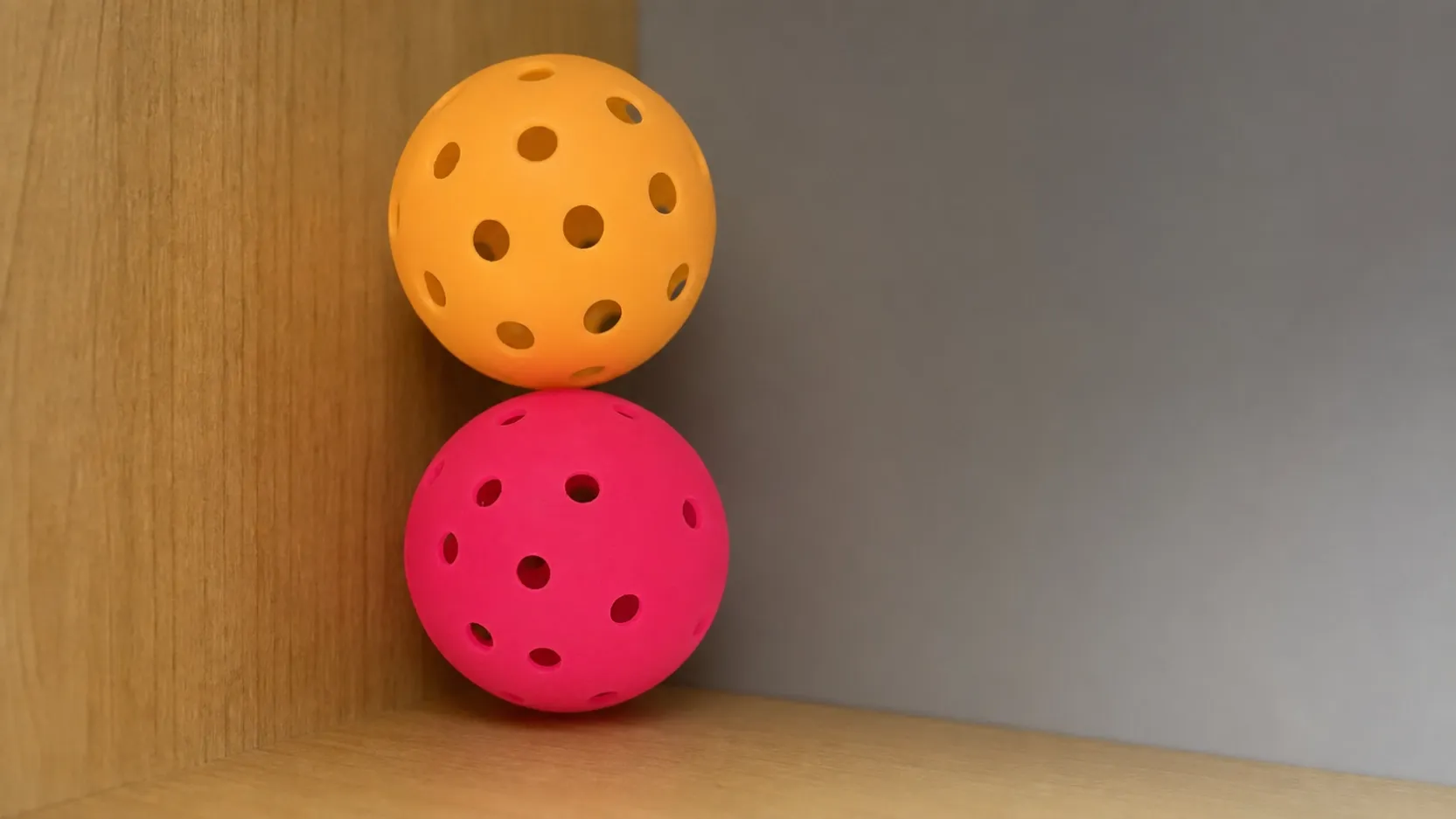
Buyers often describe pickleballs with one simple number: 26 holes or 40 holes. That number is useful, but it does not tell the whole story. Hole size, spacing, wall thickness, material formulation, molding consistency, temperature and court conditions all influence how a ball flies, bounces and wears.
This guide explains the practical differences between common 26-hole and 40-hole pickleballs and gives clubs, distributors and private-label brands a better way to select and test a product.
Quick comparison
Common 26-hole ball
- Typical use: indoor or low-wind environments
- Hole pattern: fewer, often larger holes
- Wind behavior: more affected by outdoor wind
- Surface feel: often softer and easier to control
- Court surface: indoor wood, sports flooring or smoother courts
- Buyer priority: control, comfort and indoor visibility
Common 40-hole ball
- Typical use: outdoor and general competitive play
- Hole pattern: more, usually smaller holes
- Wind behavior: commonly selected for better outdoor stability
- Surface feel: often firmer and faster
- Court surface: textured outdoor acrylic or concrete courts
- Buyer priority: durability, flight stability and weather performance
These are common market patterns, not universal rules. A manufacturer can change materials, wall thickness, hole geometry and weight distribution, so two 40-hole balls can perform very differently.
What does the hole count actually change?
The holes interrupt airflow around the ball. Their number, diameter, edge quality and distribution affect drag, rotation and flight stability. A balanced hole pattern helps the ball travel predictably. Poor spacing or inconsistent holes can create wobble, unexpected movement or uneven wear.
Hole quality also depends on the molding process. Flash, incomplete openings, distorted edges and inconsistent wall thickness can affect both performance and appearance. Buyers should inspect the complete design instead of accepting “26-hole” or “40-hole” as a quality guarantee.
When a 26-hole pickleball makes sense
A 26-hole design is commonly used for indoor play, especially in gyms and recreation centers where wind is not a major factor. Indoor players may prefer a ball that feels easier to control and produces a slightly different pace than a typical outdoor ball.
A 26-hole ball may suit:
- indoor clubs and school gyms;
- beginner classes and community programs;
- low-wind covered venues;
- training sessions that prioritize control;
- buyers building a dedicated indoor product range.
The court surface still matters. A ball tested on a wooden gym floor may behave differently on a hard indoor acrylic court. Clubs should run a short trial under their actual lighting, flooring and temperature conditions.
When a 40-hole pickleball makes sense
A 40-hole design is widely associated with outdoor play. The larger number of smaller holes is commonly selected to support more stable flight in wind, while the material and wall design are often tuned for rougher courts and harder play.
A 40-hole ball may suit:
- outdoor clubs and public courts;
- tournaments and league programs;
- distributors serving mixed recreational and competitive customers;
- training on textured acrylic or concrete surfaces;
- brands seeking a mainstream outdoor product format.
Outdoor conditions place extra pressure on materials. Cold weather can increase cracking risk, while heat can soften some formulations or change bounce. A reliable supplier should test the ball across relevant temperatures instead of relying on room-temperature samples alone.
View SYNLY's 40-hole pickleball product page and our guide to materials, molding and quality control.
Hole count does not determine quality by itself
From a manufacturing perspective, material selection usually has a greater effect on durability and climate response than the hole number alone. Process control then determines whether that material becomes a consistent product.
Important variables include:
- polymer type and formulation;
- recycled-content control and raw-material consistency;
- wall thickness and weight distribution;
- mold temperature, pressure and cooling;
- seam quality or one-piece construction;
- hole geometry and edge finish;
- roundness, compression and bounce consistency;
- storage and aging behavior.
This is why buyers should compare physical samples from the intended production process, not only 3D renders or hand-finished prototypes.
Indoor and outdoor labels are not certification claims
“Indoor” and “outdoor” are product-use descriptions. They do not automatically mean that a ball is approved for sanctioned competition.
For USA Pickleball-sanctioned use, the exact brand and model must meet the applicable standard and appear on the current USA Pickleball Approved Ball List. Certification belongs to the submitted product model—not simply to the factory, hole count or package wording.
The current USA Pickleball Equipment Standards Manual specifies a minimum of 26 and a maximum of 40 circular holes. A compliant hole count is only one part of the evaluation; dimensions, weight, bounce, compression, design and other requirements also apply. Buyers should review the current official equipment standards manual before developing a competition product.
Where does a 48-hole concept fit?
SYNLY's 48-hole pickleball is an R&D concept focused on durability, bounce response and performance in severe cold and heat. Under the current USA Pickleball hole-count requirement, a 48-hole design should not be presented as an approved competition ball.
Its value is in product research, non-sanctioned applications and exploration of alternative airflow and material solutions. If official requirements change in the future, the design can be evaluated against the updated standard. Until then, brands seeking current competition approval should develop a compliant 26-hole or 40-hole model.
How clubs should test 26-hole and 40-hole samples
Use the same evaluation process for every candidate ball.
1. Confirm the use environment
Record the court surface, indoor or outdoor setting, temperature range, expected wind, player level and session format.
2. Test matched samples
Do not compare one new ball with another model that has already been used for several sessions. Test balls of similar age and condition.
3. Measure basic consistency
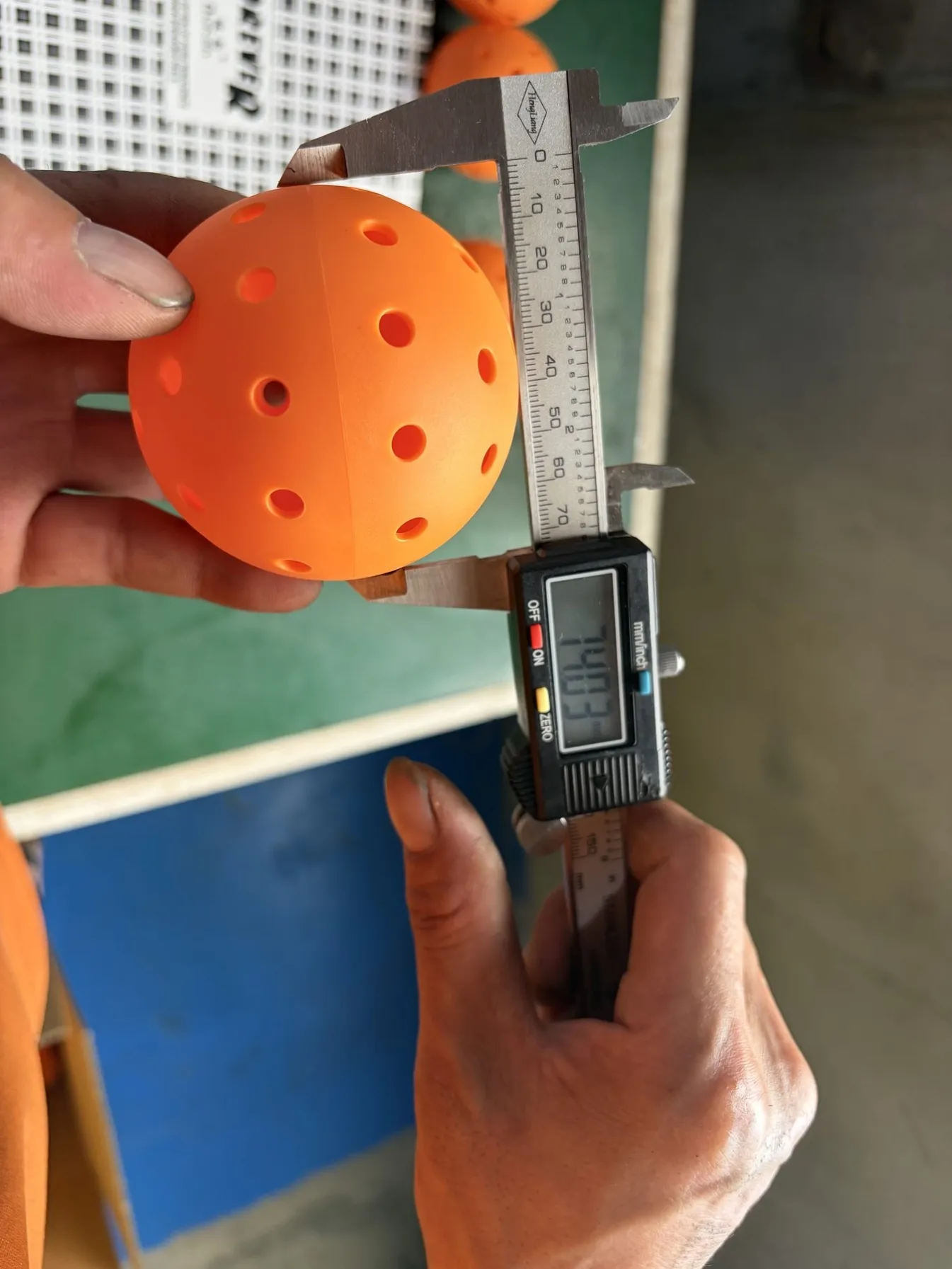
Check weight, diameter, roundness, visible wall variation, hole quality and bounce. Keep retained samples from each production batch.
4. Run a court trial
Ask several players to evaluate flight, bounce, sound, visibility and feel. Record comments instead of relying on memory.
5. Track durability
Count court-hours until cracking, warping, softness or unstable flight makes the ball unsuitable. Test in both the coldest and hottest conditions expected in the target market.
6. Review packaging and storage
Even a good ball can be damaged by heat, pressure or poor carton protection. Test the final retail or wholesale packaging, not only loose samples.
How OEM buyers should write a product specification
A useful request for quotation should include more than “26-hole ball” or “40-hole ball.” Specify:
- target market and intended use;
- indoor, outdoor, training or tournament positioning;
- color and visibility requirements;
- target weight and diameter;
- material and temperature goals;
- logo and printing method;
- packaging quantity and carton requirements;
- approval or testing objectives;
- sample quantity and trial plan;
- estimated annual order volume.
Clear specifications help the factory recommend materials, tooling, testing and packaging without guessing.
Which ball should a club buy?
Choose based on the environment and program:
- For a traditional indoor gym, begin by testing a 26-hole indoor model.
- For outdoor courts, begin with a 40-hole outdoor model designed for the expected climate.
- For coaching and ball machines, prioritize uniform feed behavior and a consistent practice batch.
- For tournaments, verify the exact approved model and event requirements.
- For noise-sensitive programs, evaluate the complete sound-management system rather than hole count alone.
Clubs should also plan enough matched inventory for daily play, coaching and replacements. See our club and tournament inventory planning guide.
FAQ
Are 26-hole pickleballs only for indoor use?
They are commonly used indoors, but the label is not an absolute technical rule. Always evaluate the complete design, material and intended court conditions.
Are 40-hole pickleballs always better outdoors?
A well-designed 40-hole ball is commonly preferred outdoors, but hole count alone does not guarantee flight stability or durability. Material and manufacturing consistency are equally important.
Which ball lasts longer: 26-hole or 40-hole?
There is no universal answer. Durability depends on polymer formulation, wall design, molding control, temperature, court surface and player intensity.
Can both 26-hole and 40-hole balls be USA Pickleball approved?
Yes, models within the current 26–40-hole requirement can be submitted, but they must also meet all other applicable specifications and complete the official approval process.
Is a 48-hole pickleball USA Pickleball approved?
Not under the current hole-count requirement. SYNLY positions its 48-hole design as a development concept rather than an approved competition ball.
Can SYNLY produce private-label indoor and outdoor balls?
Yes. OEM feasibility depends on specifications, order volume, tooling, material, logo, packaging and testing requirements. SYNLY can support development from samples and prototypes through production and export coordination.
Choose the design by evidence, not only by hole count
The best ball is the one that performs consistently in the buyer's real environment. Share your court type, climate, target players, approval goals and packaging plan with SYNLY. We can help compare 26-hole and 40-hole options and build an OEM testing plan around your market.