Building Pickleball Rental Fleets for Resorts, Camps and Tours
Plan portable pickleball rental fleets for resorts, camps and tour programs: fleet composition, durability, branding, spares and reorder timing.
Guests ask for pickleball everywhere now — resorts with one under-used tennis court, camps filling activity hours, tour operators adding a stop to a package. Most of these venues will not build pickleball courts. What they can do is run a fleet: portable equipment that is loaned to guests, set up in the morning and packed before the space is needed again.
This guide covers how rental and activity programs plan a portable pickleball fleet: what equipment carries the load, how rental use differs from personal gear, how to plan spares and reorders, and how branding turns the fleet into a guest-facing asset.
Quick answer: what does a rental fleet need?
A working fleet is four things: a court solution per play zone (portable net system or compact court kit), equipment durability proven under repeated setup and pack-away, a consumables and spares routine (balls first, then bags, nets and mats), and a branded presentation that makes the loan feel like a service rather than a box of parts.
Fleet composition by program type
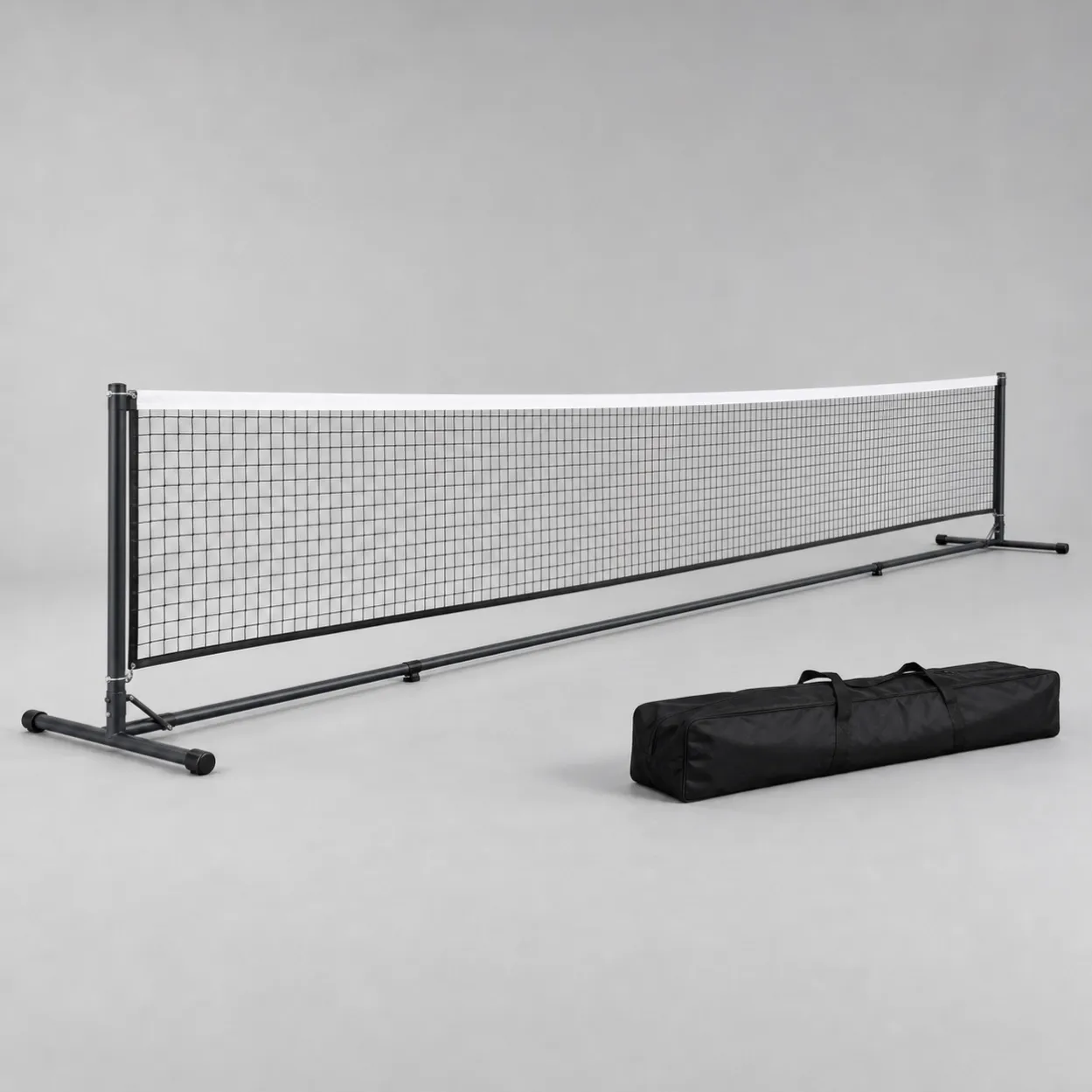
- Resorts and hotels: a full-size 6.7 m portable net system in the courtyard or activity lawn, loaner paddles, a ball supply and storage tubes or bags for the front desk. Smaller indoor spaces suit the compact court kit (1.5 m dink net and mat) instead;
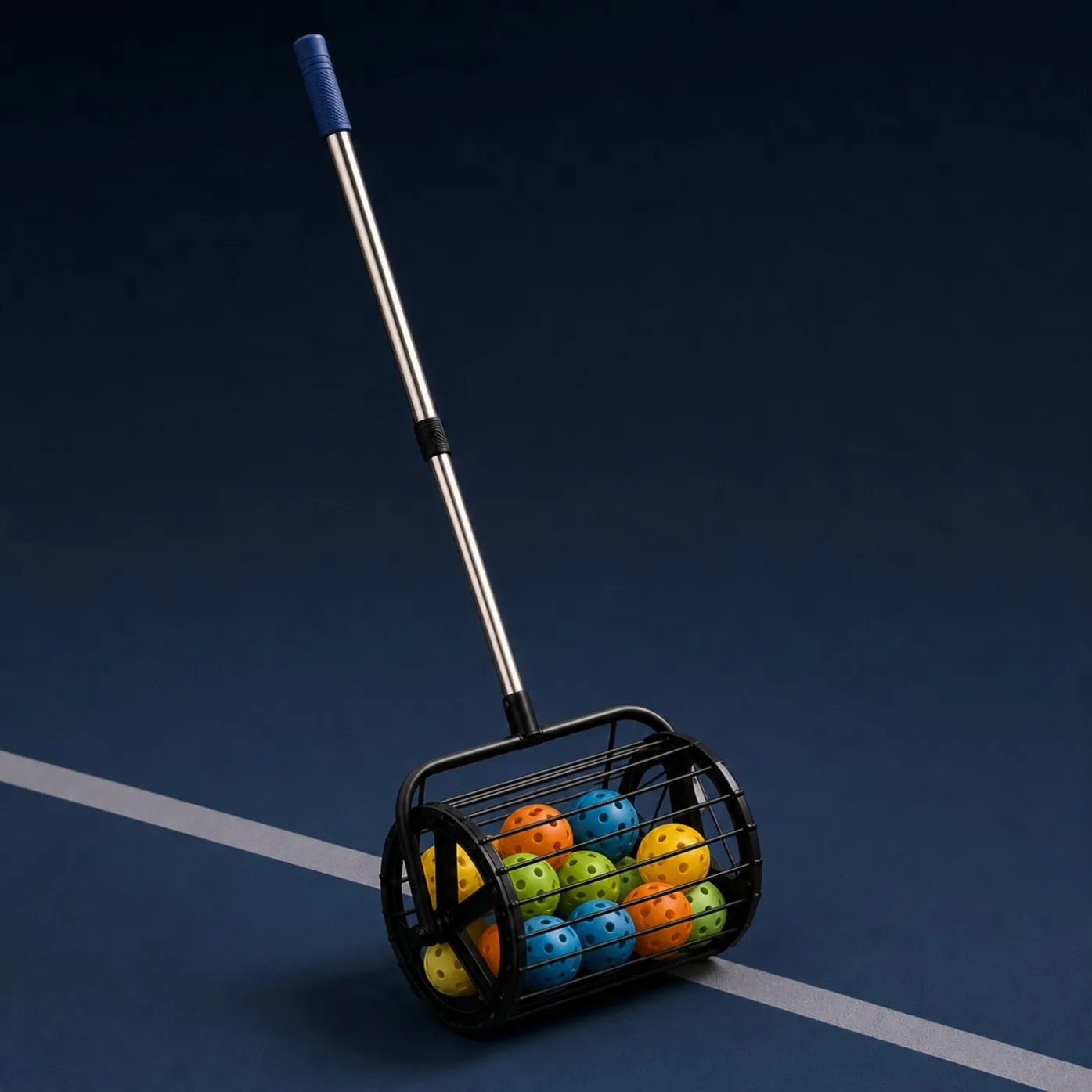
- Camps and community programs: compact court kits deploy in halls and multi-purpose rooms, with quiet balls for shared buildings and a telescopic collector to clear the floor fast between groups;
- Tour and event operators: net systems that set up in minutes per stop, a foldable ball cart for transport between locations, and a launcher for skill clinics where there is no hitting partner.
What rental use demands from the equipment
Rental gear lives a harder life than personal equipment, and the specification should say so:
- Repeated setup and pack-away — measure setup time on the sample, because it repeats every day;
- Transport between zones or venues — packed size and bag hardware matter more than in fixed facilities;
- Shared use by beginners — entry-level paddles take edge and face wear from miss-hits;
- Cleaning and storage between sessions — mats, nets and balls should survive wiping and stacked storage;
- Replaceable parts — a fleet is only sustainable if bags, nets, mats and balls can be reordered separately.
Fleet planning and reorder routine
Fleets fail on logistics, not on opening day. Practical planning points:
- Size the fleet to the play zones and the busiest session, then add the cushion the program can store;
- Treat balls as the primary consumable and keep a reorder point that fits your replenishment lead time;
- Keep a simple asset check in the loan log: what went out, what came back, what was damaged;
- Order spares and replacements before the season starts rather than mid-season;
- For multi-site operators, standardize on one equipment family so spares work across locations.
Branding the fleet
The loaned equipment is guest-facing property, and branding it is routine OEM work: logos on the net carry bag, branded balls and tubes, cart colors, and packaging for the storage room. For resorts and camps this doubles as marketing — guests photograph branded equipment, and every photo carries the venue’s identity. The buyer supplies authorized artwork, and each branding version is approved on a physical sample before the fleet order.
Sampling and order sequence
- Define the fleet: play zones, session formats, storage and transport;
- Sample each family item — net or kit, cart, collector, balls — and trial one unit in real guest use;
- Record what the trial revealed: setup time, wear points, guest feedback;
- Approve the final specifications and branding, then confirm the fleet order with spare parts and packaging;
- Keep the approved samples and specification sheet for reorders and replacements.
Frequently Asked Questions
What equipment should a rental program start with?
Most programs start with one court solution (portable net system for outdoor spaces, compact court kit for indoor or limited spaces), loaner paddles, a ball supply and a way to carry and store everything. Collectors and carts are added as session volume grows.
Do rental nets need to be full size?
It depends on the program. Guest and family play works on full-size portable nets or compact dink setups; if an event involves sanctioned matches, the organizer must check the event’s equipment rules separately.
Can the fleet carry our venue branding?
Yes — branding is available across the portable range, subject to authorized artwork and sample approval. Common surfaces include net carry bags, balls, storage tubes and cart colors.
How do programs handle wear and replacement?
Plan on balls as the main consumable, then bags, nets and mats. Confirm the spare-parts list and reorder process when placing the fleet order, and keep a simple damage log from the loan process.
Can one order cover multiple sites?
Yes — multi-site orders are common; standardizing on one product family keeps spares interchangeable. Packaging and packing lists can be arranged per site.
Request a Fleet Quotation
Send the venue types and play zones, expected guest or camper volume, indoor or outdoor settings, branding requirements and delivery timeline. SYNLY can propose a fleet composition with samples, spares and per-site packaging.
Email: parry@synlypickleball.com
WhatsApp: +86 15067540770
Related: Portable net system · Compact court kit · Telescopic collector · Equipment for hotels and resorts · Portable net buying guide · Contact SYNLY