Pickleball Paddle Edge Tape: Width, Finish, Adhesion and OEM Guide
Learn how to source pickleball paddle edge tape by checking width, finish, adhesion, paddle fit, packaging and customization before wholesale orders.
Edge tape is one of the most familiar pickleball paddle accessories, yet it is easy to source badly. Buyers sometimes approve a color from a screen and discover later that the tape is too narrow, too stiff for the curve, difficult to center or visually inconsistent with the paddle line. A strong wholesale brief should cover width, length, finish, adhesive behavior, installation and packaging before it covers slogans.
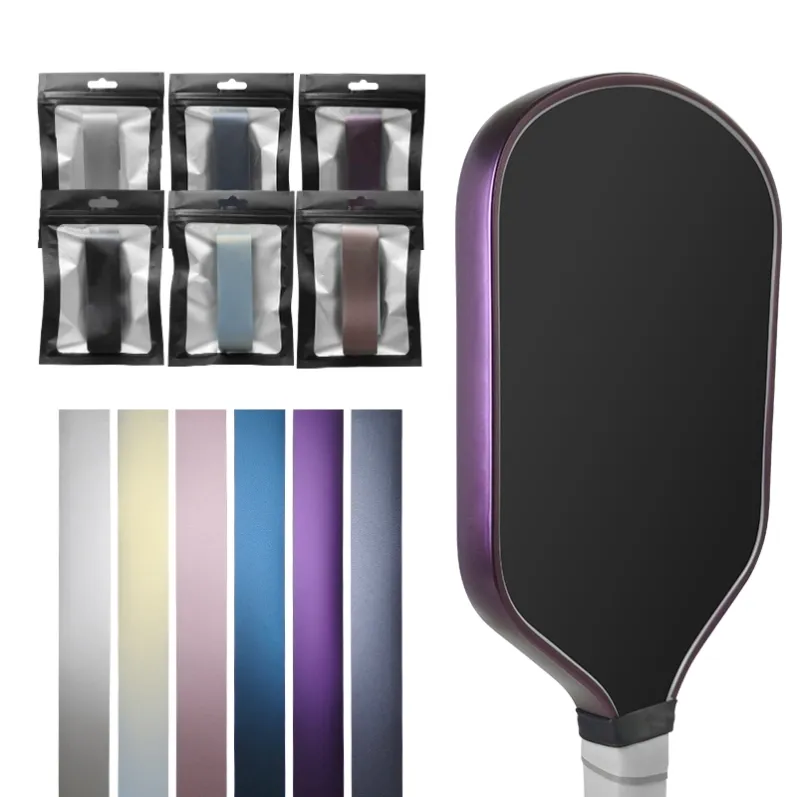
The current SYNLY reference range shows a full-wrap adhesive edge strip with matte, color-shifting or metallic-style visual effects, depending on the variant. Six visual options are shown: silver, pale iridescent blue, soft pink, deep blue, purple and cool gray-blue. Exact dimensions, material and adhesive specifications require sample and written-specification confirmation.
Match tape width to the paddle edge
The correct width depends on paddle thickness, edge-guard profile and the amount of overlap desired on each face. A narrow strip may leave the sidewall exposed. An overly wide strip may extend farther onto the hitting surface than intended or create wrinkles around curves.
Measure the edge at several points, including the top, shoulder and lower side. If the paddle has a molded edge guard, note any ribs, logos or changes in profile. Then install a sample using the same centering method expected of the customer. Check the border on both paddle faces and confirm that the tape follows the curve without bunching.
Do not finalize a “fits 14 mm / 16 mm / 19 mm” claim based only on nominal core thickness. The finished edge can include face layers, perimeter material and an edge guard. Verify the complete paddle, not just the core description.
Length and shape matter too
A full-wrap strip needs enough length for the intended start and end points, plus a reasonable installation allowance. The buyer should decide whether the tape covers only the top arc, most of the perimeter or a defined section near common court-contact areas.
Test the strip on different paddle shapes if the SKU will be sold broadly. An elongated paddle has a different perimeter and shoulder geometry from a widebody paddle. A sample that works on one may finish short or wrinkle on another. If multiple lengths are needed, make them distinct SKUs with clear packaging rather than relying on the customer to guess.
Evaluate finish under real lighting
Matte and metallic-style finishes can look different under daylight, retail lighting and phone-camera flash. Approve physical color samples and define which visual variation is acceptable. Place the tape beside the paddle colors that will be used in photography and in the retail bundle.
The current source imagery describes a skin-like matte appearance. That can be used as a finish description after sample review, but it should not be turned into a material claim. Likewise, a decorative metallic look does not establish metal content.
USA Pickleball’s equipment standards also address reflectivity for paddle hitting surfaces and edge guards. An accessory brand should therefore avoid assuming that a shiny or highly reflective finish is suitable for sanctioned competition. Market the visual effect accurately and direct players to current rules and event officials when competition use is contemplated.
Adhesion requires a complete test cycle
Initial stick is only one part of adhesive performance. A buyer should evaluate positioning, pressure during application, edge lift, residue and removal on each target paddle finish. Temperature and storage conditions can also influence adhesive behavior.
A practical sample cycle can include:
- Clean and dry the paddle according to its manufacturer’s instructions.
- Center the tape with equal overlap on each face.
- Press along the curves without stretching the strip excessively.
- Inspect immediately for wrinkles, bubbles and lifting ends.
- Use the paddle during a defined recreational practice period.
- Reinspect the top arc, shoulders and tape ends.
- Remove one sample and record residue or surface change.
Do not promise “no residue,” “never wrinkles” or “universal adhesion” unless a documented test supports the exact paddle finishes and use conditions. Source promotional images can identify the intended function, but they are not a substitute for buyer approval.
Consider the effect on the paddle
Edge tape adds material to the paddle. Depending on width, thickness and length, it can change weight, swing feel, total dimensions and appearance. The USA Pickleball standards recognize edge-guard tape as a type of alteration that may be permitted, but altered paddles still have to meet all specifications. That is not the same as saying every tape, installation or paddle combination is automatically legal for sanctioned play.
Record tape weight and the installed paddle’s total measurements when competition-oriented customers are in scope. Tell players to confirm current rules, approved-equipment requirements and event policies. Avoid using an approval seal unless the relevant approval has actually been granted.
Plan OEM customization around decisions buyers can verify
Useful customization options may include color, finish, printed branding, backing-paper design, retail card and multi-piece packaging. Begin with the paddle group and customer segment, then select the tape version.
For a paddle brand, the strongest package may include model-specific width and installation instructions. For a general accessory retailer, a clearly stated measured width and length, plus a compatibility-check diagram, may be more valuable than an unsupported universal-fit claim. Clubs may prefer simple color coding or multipacks.
MOQ, price, lead time, exact material, dimensions and packing quantity are not established in the supplied files. They should be quoted after the buyer confirms tape format, colors, branding and packaging.
Wholesale approval checklist
- measured tape width, thickness and length;
- net weight per strip or roll;
- target paddle models and edge profiles;
- installed overlap on both paddle faces;
- flexibility around top and shoulder curves;
- color and finish under neutral light;
- initial tack, edge lift and removal observations;
- residue test on each intended paddle finish;
- packaging quantity and application instructions;
- logo, barcode and warning-text approval;
- current rules statement for the destination market.
This checklist gives product development, quality control and customer service the same reference. It also makes reorders clearer because the approved sample is tied to measurable features rather than a color name alone.
Protection should be described as an intended function
Edge tape is commonly purchased to help shield a paddle edge from cosmetic scuffs and minor contact. The source product is presented for scratch and wear protection. Responsible content should say “designed to help protect” rather than guaranteeing that no damage will occur. A tape cannot prevent every impact, and it does not repair a cracked edge guard or damaged core.
Accurate positioning still creates a strong product story: a customizable full-wrap edge accessory with multiple matte color effects, subject to paddle-fit and adhesive testing. That is specific enough for buyers and honest enough for long-term retail use.
FAQ
How do I choose the right paddle edge tape width?
Measure the complete finished paddle edge and decide how much overlap is wanted on each face. Confirm with an installed sample rather than nominal core thickness alone.
Does edge tape fit every paddle shape?
Not automatically. Perimeter length, shoulder curves and edge-guard profiles vary, so fit and length should be tested.
Is pickleball paddle edge tape allowed in tournaments?
Edge-guard tape may be an allowed alteration under relevant rules, but the installed paddle must still meet all specifications. Check current rules and event officials; do not assume every configuration is compliant.
Can matte colors and packaging be customized?
Color, finish, branding and packaging feasibility can be discussed after the required dimensions and use case are supplied. Final approval depends on samples.
Request a Sample or Quotation
Developing a private-label paddle edge tape or model-specific protection kit? Email parry@synlypickleball.com or WhatsApp +86 15067540770 with the paddle thickness, edge profile, target colors, order quantity and packaging concept. SYNLY can help structure a sample review around fit, finish and responsible claims.
Related: View the matching product · Browse SYNLY products · Contact SYNLY