How to Clean a Pickleball Paddle Surface Without Damaging It
A practical guide to gentle pickleball paddle cleaning, surface compatibility, spot testing and choosing a fine-mist cleaner for retail or club use.
Ball residue, court dust, hand marks and bag debris can collect on a pickleball paddle. Cleaning seems straightforward, but paddle faces are not all the same. A method that is harmless on one printed or coated face may affect the appearance or texture of another. The safest approach starts with the paddle manufacturer’s instructions, uses the gentlest effective method and treats every unfamiliar cleaner as a product that needs a small-area test.
This matters to players, but it matters even more to retailers and clubs. A cleaning product is not only a bottle. It is a set of usage instructions, compatibility limits and customer expectations. Clear guidance protects both the paddle and the accessory brand.
Begin with the paddle maker’s care guidance
Check the paddle manual, warranty page or official care page before applying a liquid. Published paddle-care guidance commonly starts with a soft, lint-free or microfiber cloth, water or a small amount of mild soap where the manufacturer allows it, and avoiding harsh chemicals. Surface-specific tools should only be used when the paddle maker recommends them for that exact face. The important point is that one cleaning method does not automatically apply to every paddle brand or surface.
If the paddle maker says to use only water, follow that direction. If it allows a small amount of mild soap, keep the mixture mild and avoid soaking the face. Never interpret “cleaner” as permission to use strong solvents, abrasive powders or aggressive brushes.
A conservative cleaning sequence
For a routine clean, start with a dry microfiber cloth to remove loose dust. Inspect the paddle for cracks, peeling graphics, edge damage or open seams. If the paddle is structurally damaged, cleaning is not a repair.
Next, lightly dampen the cloth according to the manufacturer’s instructions. It is generally safer to put a small amount of liquid on the cloth rather than saturating the paddle. Wipe gently, working on a limited area at a time. Avoid flooding the edge guard, throat or any opening where moisture could enter the core. Use a separate dry cloth and allow the paddle to air-dry before returning it to a cover or bag.
For a new cleaner or a new paddle finish, test an inconspicuous area first. Check the surface immediately and again after it dries. Stop if color transfers to the cloth, the surface becomes tacky, gloss changes, printed graphics soften or the face texture appears altered.
Different surfaces require different decisions
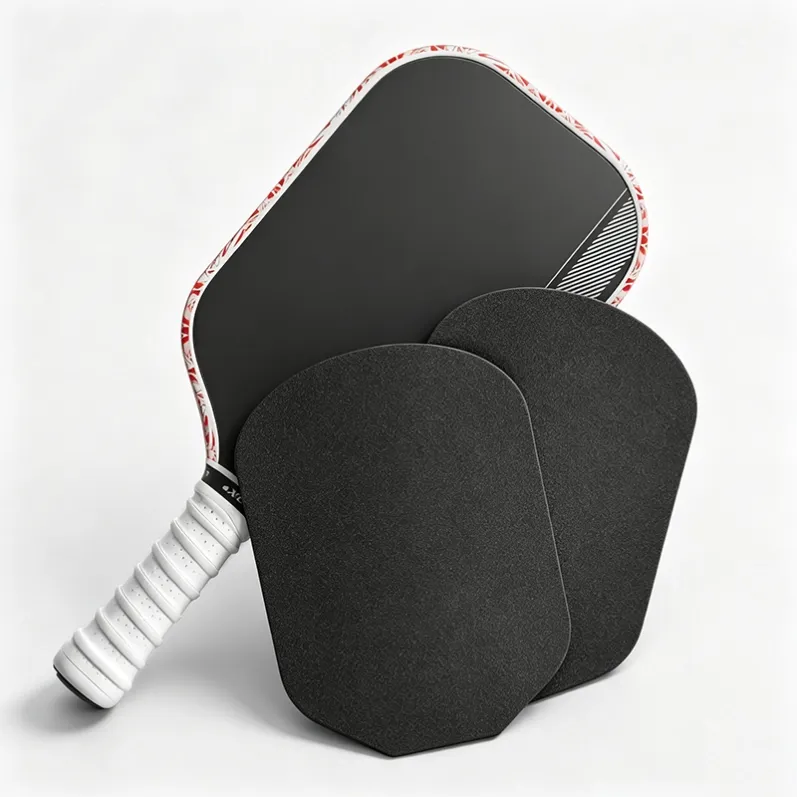
A painted fiberglass face, a printed composite face and a raw carbon-fiber face can react differently. Raw textured faces may retain ball dust in their surface structure, but that does not justify hard scrubbing. A cleaning block described by the paddle manufacturer may be appropriate for a specified raw carbon surface; it should not automatically be used on every coating or printed graphic.
Likewise, a fine-mist liquid can help control the amount applied, but nozzle size alone does not establish compatibility. Formula documentation, packaging instructions and real-surface testing are more important than a dramatic before-and-after image.
What wholesale buyers should evaluate in a paddle cleaner
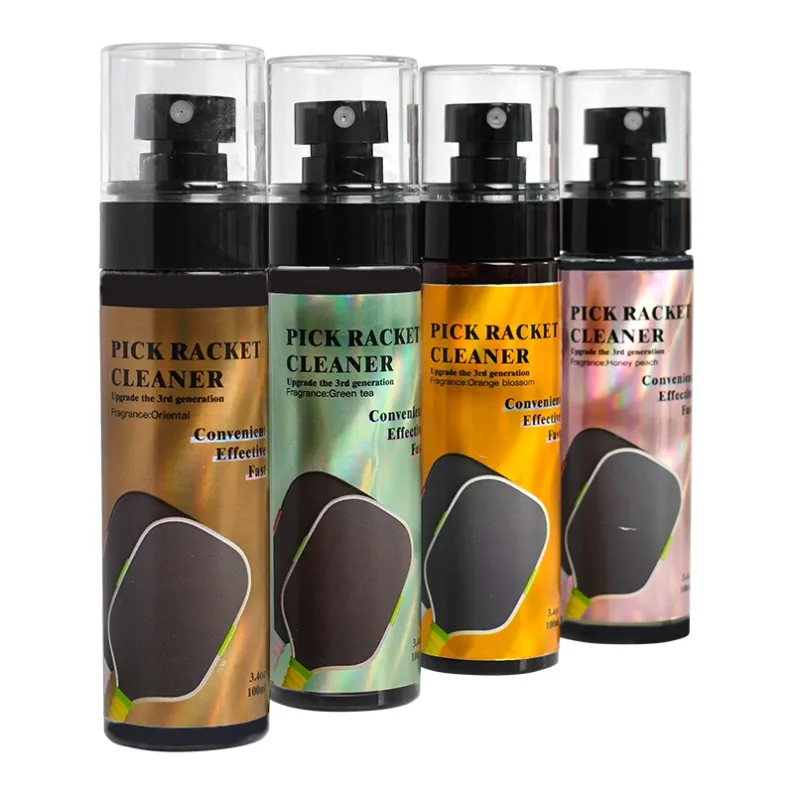
The current SYNLY reference range includes a 100 ml / 3.40 oz fine-mist paddle cleaning spray. Product imagery shows a 0.3 mm nozzle and four scent presentations. Those are useful merchandising attributes, but they do not establish compatibility with every paddle surface.
A buyer’s evaluation should include:
- an ingredient or formula document suitable for the intended market;
- usage and warning text in the destination language;
- container volume and fill-tolerance confirmation;
- spray-pattern and leakage testing;
- cap security during shipping;
- spot tests on every target face finish;
- drying, residue and odor observations;
- label durability and batch marking;
- retail packaging and transport requirements.
Claims such as “non-toxic,” “baby safe,” “eco-certified,” “restores spin” or “works on all surfaces” require current evidence for the exact formula and destination market. The available product information does not establish those claims.
Why a fine mist can be useful
A controlled mist can help the user avoid pouring too much liquid onto the paddle. It also makes it easier to apply liquid to a cloth rather than directly soaking the face. For retail positioning, that is a practical benefit to explain without turning it into a performance promise.
The four visual variants can support a color- or fragrance-led assortment. However, scent names and formula details should be confirmed before packaging is printed. Fragrance choice does not change the core care rule: use a small amount, test first and follow the paddle manufacturer’s directions.
Cleaning does not reverse structural wear
Dark transfer marks and surface dust can sometimes be removed, but a cleaner cannot repair delamination, restore worn texture or reverse damage inside the core. It also cannot make an unapproved paddle approved or return a modified surface to certified condition.
Good product content should make that distinction. Tell users what maintenance can reasonably do—remove suitable surface residue when used as directed—and what it cannot do. This reduces misuse and builds more trust than an exaggerated restoration claim.
Create instructions that customers can follow
An effective retail insert can be short:
- Read the paddle manufacturer’s care instructions.
- Test the cleaner on a small, inconspicuous area.
- Apply a small amount to a clean microfiber cloth unless the paddle maker directs otherwise.
- Wipe gently; do not soak the paddle.
- Dry with a clean cloth and allow the paddle to air-dry.
- Stop use if the surface color, gloss, texture or adhesion changes.
This is useful content for clubs, e-commerce stores and accessory kits because it answers the real customer question: how to use the product responsibly.
FAQ
Can I use household cleaner on my pickleball paddle?
Many paddle makers advise against harsh or general-purpose household cleaners. Start with the manufacturer’s care instructions and the gentlest recommended method.
Should I spray cleaner directly on the paddle?
Unless the paddle maker specifically instructs direct application, applying a small amount to a microfiber cloth can reduce the risk of over-wetting.
Is one cleaner safe for every paddle surface?
No universal compatibility is claimed. Raw carbon, coated, painted and printed surfaces can require different care.
Does cleaning restore paddle performance?
Cleaning may remove suitable residue, but it cannot repair structural damage or guarantee restored spin, texture or play characteristics.
Request a Sample or Quotation
Need a private-label paddle-care accessory with clear, conservative user instructions? Contact parry@synlypickleball.com or WhatsApp +86 15067540770. Share your target market, bottle and packaging needs, and the paddle surfaces you expect customers to use so sample testing can be planned responsibly.
Related: View the matching product · Browse SYNLY products · Contact SYNLY