
16 mm EPP Foam Core Pickleball Paddles: A Buyer’s Checklist
Check 16 mm EPP foam core pickleball paddles before ordering: nominal thickness, weight and balance, edge construction, samples and reorder specs.
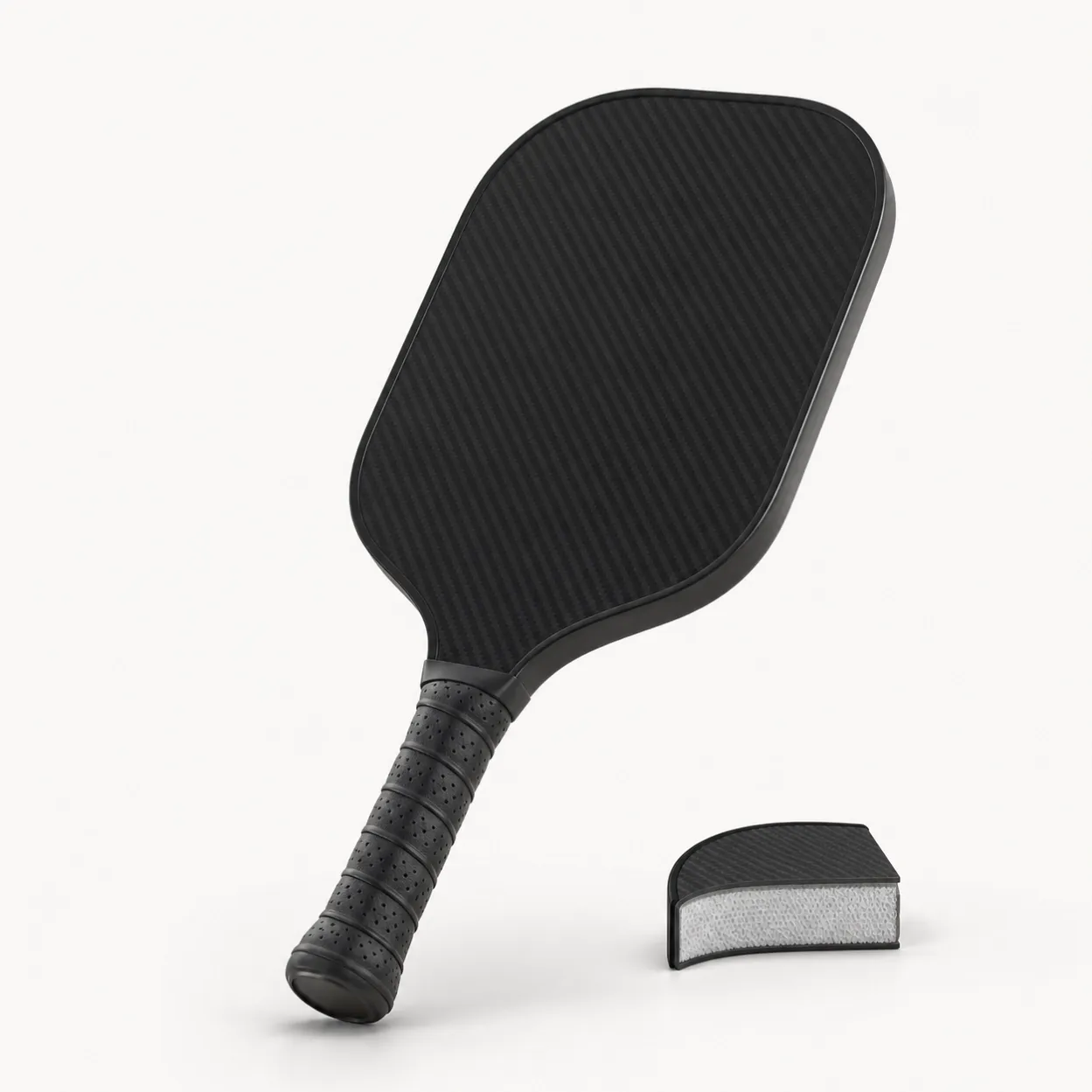
Paddle buyers compare faces — carbon, fiberglass, wood — and thickness numbers like 13 mm, 14 mm or 16 mm. The core sits invisible between the faces, yet it is the part that gives a paddle its feel, its weight distribution and much of its durability story. When a specification says “16 mm EPP foam core,” a B2B buyer should know what is being promised and what to verify.
This guide is a buyer’s checklist for EPP foam core paddles, using the SYNLY reference 16 mm carbon fiber paddle as the example, and explains what to confirm on the sample and the order specification.
Quick answer: what is a 16 mm EPP foam core paddle?
It is a paddle whose nominal core thickness is 16 mm, built with a polypropylene foam (EPP) core instead of a honeycomb or solid polymer core. The SYNLY reference product pairs a 16 mm EPP foam core with a carbon fiber face as a lightweight paddle positioned for stable feel, controlled response and durable play, with custom graphics, logos and packaging available for OEM/ODM orders.
Why the core, not just the face, defines the paddle
Two paddles with identical carbon faces can play differently once the core changes. The core influences:
- Overall thickness and the feel of the paddle at contact;
- Weight and balance — how the paddle moves in the hand;
- The sound and feedback the player perceives on impact;
- How the paddle behaves over time under repeated play.
Buyers do not need to resolve performance debates to buy well. They need the specification to be documented and the sample to be tested against it.
What to verify before ordering
- Nominal vs measured thickness. “16 mm” is a nominal figure. Ask how thickness is measured and what tolerance applies, then confirm on the physical sample.
- Core material documentation. Confirm in writing that the core is EPP foam and the face material is as specified. Material certificates or batch records should be available on request.
- Weight and balance on the sample. Weigh and balance-test the samples your players will actually use; agree the acceptable range and record it in the order specification.
- Edge construction. Check the edge guard and edge finishing — it protects the core’s perimeter and is a common wear point on club paddles.
- Face-to-core bonding. Look for bubbles, separation or soft spots on the face; agree an inspection check for bulk lots.
How to run a sample evaluation
A structured sample review turns an opinion into a record:
- Number the sample paddles and log their measured weight, balance and thickness;
- Test with the intended players — club members, coaches or program participants;
- Record feel, sound, control and any edge or face concerns session by session;
- Compare against the paddle the program currently uses;
- Approve the sample and freeze the specification: core type, thickness tolerance, weight range, graphics version and packaging.
Reorder discipline for paddle programs
Cores are where quiet specification drift shows up first. Keep the approved sample and a written specification (core material, thickness, weight range, face material, edge type, graphics revision) so a reorder can be checked against the original — not against memory or a chat thread. If a future production lot is proposed with a different core or thickness window, treat it as a new sample approval.
Frequently Asked Questions
Is a 16 mm paddle better than a 13 mm or 14 mm paddle?
Thickness is a preference and program decision, not a ranking. Buyers usually select thickness together with core material, face material and target player level, then verify on a sample. The right choice is the one approved by the players who will use it.
What does EPP mean?
EPP is expanded polypropylene — a foam material used in paddle cores. The SYNLY reference 16 mm paddle uses an EPP foam core with a carbon fiber face. Request material documentation for the exact order.
Can we customize a 16 mm EPP core paddle with our brand?
Yes — custom graphics, logos and packaging are available for OEM/ODM orders, subject to sample approval and order confirmation.
How do we check thickness when the goods arrive?
Agree the measurement method and sampling plan before production, then measure at the agreed points on the delivered paddles and compare with the approved range recorded in the specification.
Does a thicker core guarantee more control?
No blanket guarantee applies. Feel and control depend on the complete build and on player preference. Evaluate the actual model with the intended players and approve it against your program’s requirements.
Request a Paddle Sample
Send the target player level, preferred core and face specification, weight and balance targets, branding requirements and order volume. SYNLY can prepare a 16 mm EPP core sample paddle for evaluation and confirm the specification in writing.
Email: parry@synlypickleball.com
WhatsApp: +86 15067540770
Related: View the 16 mm EPP core paddle · Paddle material and MOQ guide · Paddle sample testing checklist · Golden sample approval checklist · Browse SYNLY products · Contact SYNLY