
Aug 13, 2026Material Notes
Bulk Pickleball Paddle Batch Inspection Checklist for B2B Buyers
A receiving-inspection workflow for bulk paddle shipments covering sampling, weight and size tolerances, bonding, finish, packaging and defect records.
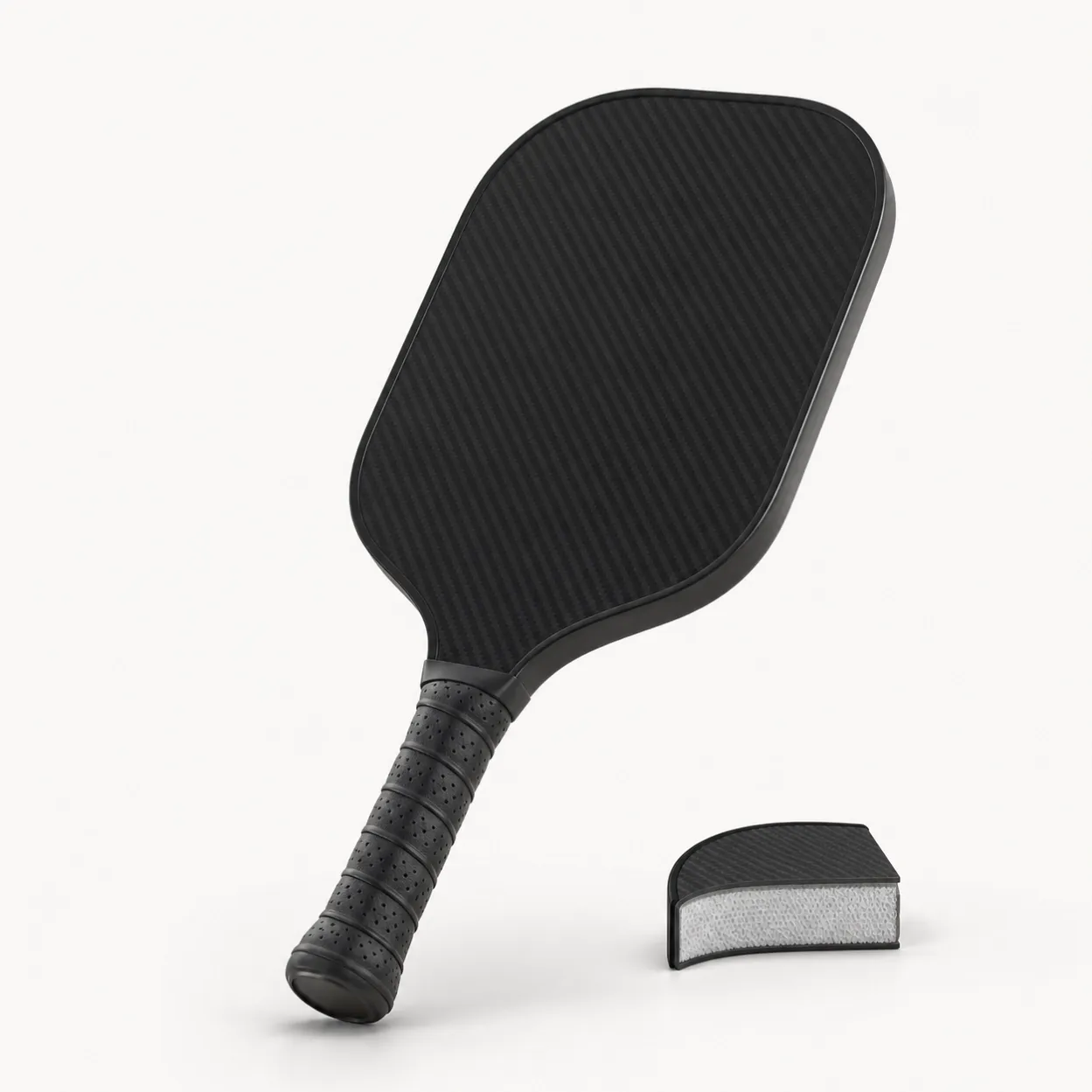
Pickleball Paddle QC Checklist for Clubs and Distributors
For a club rental fleet, distributor inventory, private-label brand, association demo event or coach-training kit, a paddle must do more than feel good for five minutes. Recent 2026 player discussions repeatedly mention edge-guard separation, core damage, inconsistent pop and surface-texture wear. For a B2B buyer, those problems become returns, complaints and lost trust.
Do Not Approve a Bulk Order From One “Golden Sample”
A single perfect sample cannot prove batch consistency. Ask for several production-representative samples and record their weight, thickness, dimensions and balance. Test them with different players and compare the feedback. The approved sample should become the reference standard for mass production.
Five Quality Checks Before Bulk Purchasing
- Face material and bonding
Confirm the face material, carbon-fiber specification and bonding process. Check for bubbles, uneven surfaces, soft areas or changes in sound across the paddle face.
- Core consistency
The core affects feel, power and the sweet spot. Compare several paddles from the same sample group. Large differences in sound, rebound or dead zones may indicate inconsistent construction.
- Edge-guard retention
Edge-guard separation is a frequent complaint in current player discussions. Inspect the fit around the full perimeter, the joint area and the bond after repeated play and light impact.
- Weight and balance tolerance
Two paddles with the same model name should not feel completely different. Clubs and coach-training programs especially need matched sets. Buyers should agree on an acceptable weight and balance range before production.
- Surface texture, printing and finish
Check texture uniformity, logo adhesion, color consistency, handle wrapping and packaging. A cosmetic defect may not change play, but it can still create returns for distributors and private-label brands.
Different Buyers Need Different Approval Standards
Clubs should prioritize durability, predictable replacement cost and easy-to-manage rental sets. A short real-court trial with several members is more useful than relying only on one experienced player.
Distributors should focus on batch consistency, packaging strength, defect handling and reorder stability. The lowest unit price is not valuable if returns and customer service consume the margin.
Private-label brands should require written material specifications, an approved reference sample, logo and color confirmation, plus pre-shipment inspection records.
Associations and tournament organizers need consistent equipment for demonstrations, training and events. If competitive use is planned, buyers should also confirm the relevant approval status instead of assuming every paddle is tournament approved.
Coach-training programs usually need forgiving paddles with consistent weight, grip size and control. A mixed sample set can help coaches compare beginner, junior and performance-oriented options before choosing a training package.
Why SYNLY Is Testing Before Scaling Paddle Production
SYNLY is currently comparing carbon-fiber board suppliers and evaluating material quality, construction and production cost. A lower material price is useful only when the finished paddle still meets the required performance and consistency standards. If testing passes, value-focused paddle production could begin as early as September 2026. Detailed specifications will be released after validation.
Frequently Asked Questions
How many paddle samples should a B2B buyer test?
For an initial evaluation, testing several units is better than approving one sample. The exact quantity depends on the model and order size, but the samples should represent the intended production materials and process.
Can SYNLY prepare different paddles for club or coach testing?
Yes. Sample options can be discussed for club rental use, distributor evaluation, private-label development, association demonstrations and coach-training programs.
Does a lower paddle price always mean lower quality?
No. Cost depends on materials, construction, order volume and supply-chain efficiency. The important point is to verify specifications and batch consistency before mass production.
Can a private-label brand customize logos and packaging?
Yes. Logo, color, grip, packaging and other options can be evaluated during sample development. Final details depend on the selected paddle construction and order requirements.
Start With a Sample, Not a Promise
Tell SYNLY how the paddles will be used, who will test them and what price range you need. We can discuss materials, sample validation, private labeling and a practical production plan before you commit to a bulk order.
Research references: USA Pickleball equipment standards materials; 2026 r/Pickleball discussions about core damage, edge-guard separation and texture durability; current wholesale supplier guidance recommending sample units, written specifications and defect policies.