Aug 9, 2026
Bulk Pickleball Buying Checklist: 8 Tests Clubs and Distributors Should Require
Use this practical B2B checklist to compare pickleball samples for bounce, durability, roundness, weather performance, batch consistency and tournament eligibility.
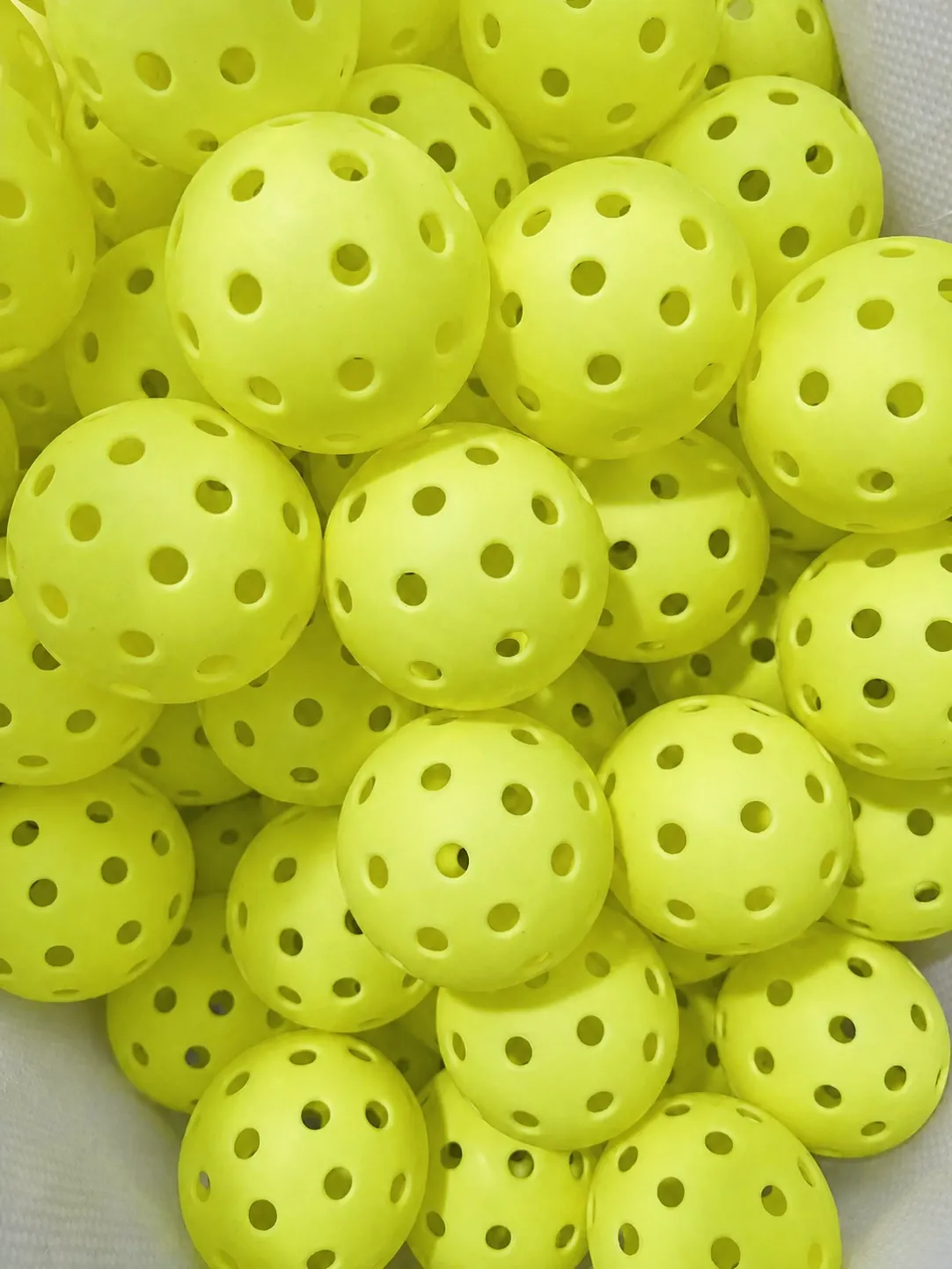
Buying pickleballs in bulk is different from buying a few balls for personal play. A club, distributor, retailer or tournament organizer needs a ball that performs consistently not only in one sample, but across cartons, production batches and changing playing conditions.
The lowest unit price can become expensive when balls crack early, bounce differently, arrive out of round or generate repeated customer complaints. This guide explains the eight checks buyers should complete before approving a bulk pickleball order.
Start With the Intended Use
Before comparing samples, define where and how the balls will be used. A club rental program, beginner class, retail line and sanctioned tournament do not have identical requirements. Our guide to club, tournament and festival equipment planning explains how those use cases change the purchasing brief.
• Club practice: durability, predictable bounce and replacement cost matter most.
• Retail distribution: repeatable specifications, packaging and complaint rates matter.
• Events and tournaments: visibility, flight consistency, supply reliability and any applicable approval requirements are critical.
• Private-label projects: the approved sample must be reproducible after logo printing and packaging.
A useful RFQ should state the playing environment, preferred color, expected monthly volume, packaging format and whether official tournament eligibility is required.
- Verify Diameter, Weight and Roundness
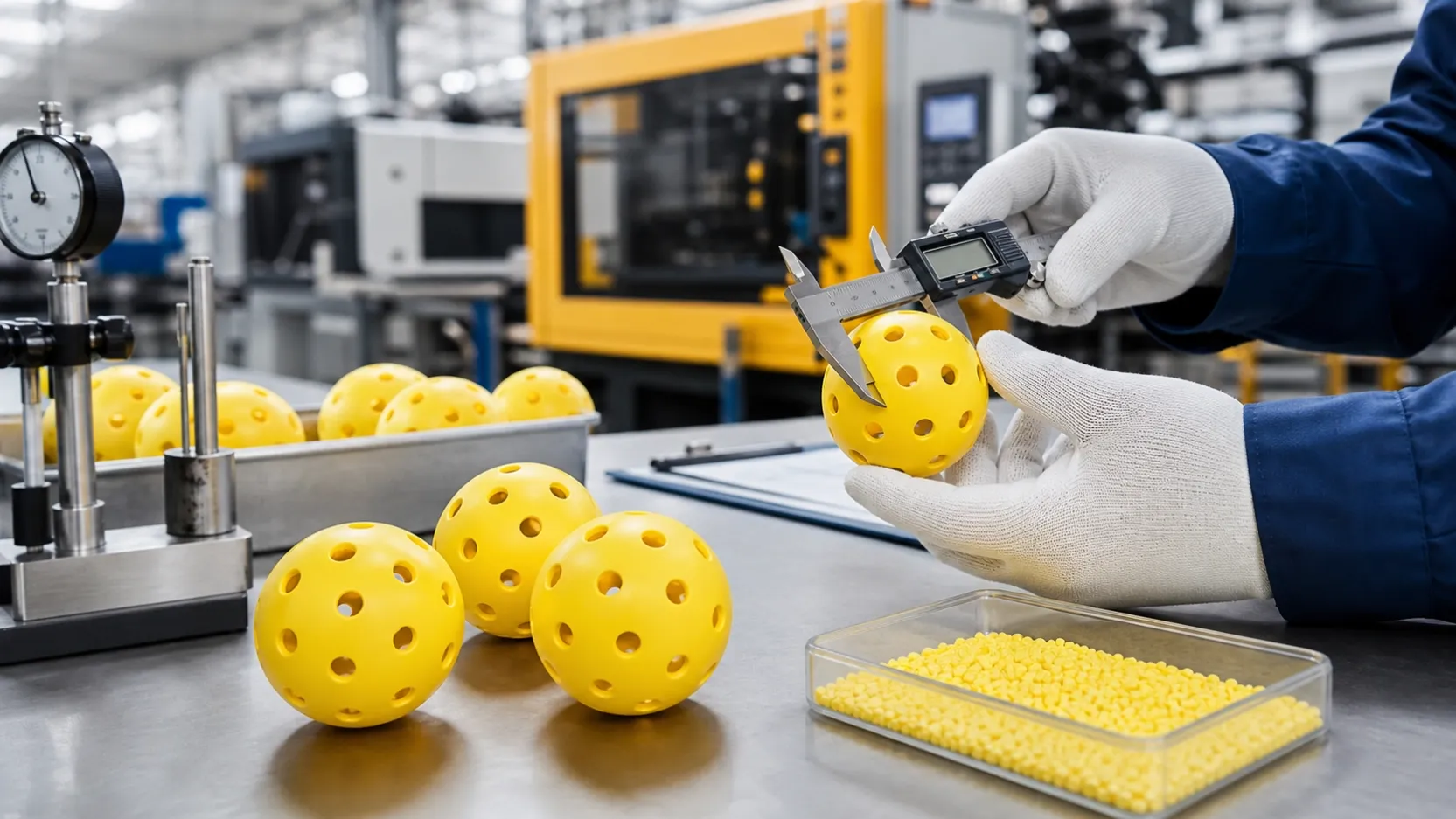
Basic dimensions should be measured across multiple samples, not copied from a product listing. The USA Pickleball Equipment Standards Manual specifies a diameter range of 2.87 to 2.97 inches and a weight range of 0.78 to 0.935 ounces. It also limits out-of-round diameter variance.
For buyers, the important question is not simply whether one ball falls inside a range. Ask the factory for the average, tolerance and inspection method used for the production batch.
- Test Bounce Consistency, Not Just One Bounce
A single impressive rebound does not prove consistency. Test several balls from the sample set, repeat the drop at the same height and record the results. The official equipment standard uses a controlled drop and surface, so casual hand testing should not be presented as certification.
For internal purchasing comparison, use the same room, surface, drop height and measurement method for every candidate. Large variation between balls is a warning sign even when the average looks acceptable.
- Compare Durability Under Repeated Play
Clubs and distributors should ask how the ball changes after repeated hard impacts. Look for cracks, soft spots, deformation, seam failure and a noticeable loss of bounce. Durability should be evaluated together with playing feel: an extremely rigid ball is not automatically a better ball.
A practical sample approval process includes both controlled impact testing and real court play. Record how many balls fail, how they fail and after approximately how much use.
- Check Hot- and Cold-Weather Performance
Polymer behavior changes with temperature. A ball that feels balanced in a mild indoor room may become harder in cold weather or softer in heat. Buyers serving different climates should request conditioned samples and compare bounce, roundness and cracking behavior after temperature exposure.
This is especially important for outdoor clubs, regional distributors and events that cannot control court temperature. The purchase specification should identify the target climate instead of assuming one formulation suits every market.
- Examine Hole Quality and Flight Stability
Inspect hole edges, spacing and consistency. Burrs, deformed holes or uneven molding can affect appearance and may influence flight. Rotate the ball, check it from several angles and compare multiple samples.
Hole count alone does not determine quality. Material formulation, wall thickness, molding control, geometry and post-molding inspection work together. Buyers should evaluate the complete construction rather than treating one design feature as a guarantee.
- Approve a Reference Sample and Written Tolerances
Keep one signed or clearly labeled reference sample with the buyer and one with the factory. Attach a written specification covering color, weight, diameter, bounce method, logo position, packaging and acceptable cosmetic limits.
This turns an opinion such as “same as the sample” into a repeatable quality agreement. It also gives both sides a fair basis for handling an out-of-specification batch.
- Audit Batch Consistency Before Shipment
Do not limit inspection to the first development samples. Ask how production lots are identified and how many units are sampled during manufacturing and before packing. For larger orders, a pre-shipment inspection can compare randomly selected balls with the approved reference.
Useful records may include raw-material lot, molding date, cavity or machine information, inspection results and packing quantity. Traceability makes it easier to investigate a problem without treating the entire order as unknown. See also our explanation of how materials, molding and quality control work together.
- Confirm Tournament Eligibility Separately
Product quality and official approval are related but not identical. USA Pickleball states that a ball selected for a sanctioned tournament must appear on its official approved-ball list. Buyers should search the current list by brand and model instead of relying only on supplier claims.
For club practice, promotional products or development projects, formal approval may not be necessary. For sanctioned competition, confirm the exact model and status before ordering.
A Better Bulk-Order Approval Workflow
• Define the playing environment and buyer requirements.
• Receive samples from the intended production specification.
• Measure several balls using the same methods.
• Run court-play, durability and temperature comparisons.
• Approve a physical reference sample and written tolerances.
• Confirm logo, packaging and barcode details.
• Inspect the production batch before shipment.
• Retain batch records for repeat orders and complaint analysis.
How SYNLY Supports Clubs and Distributors
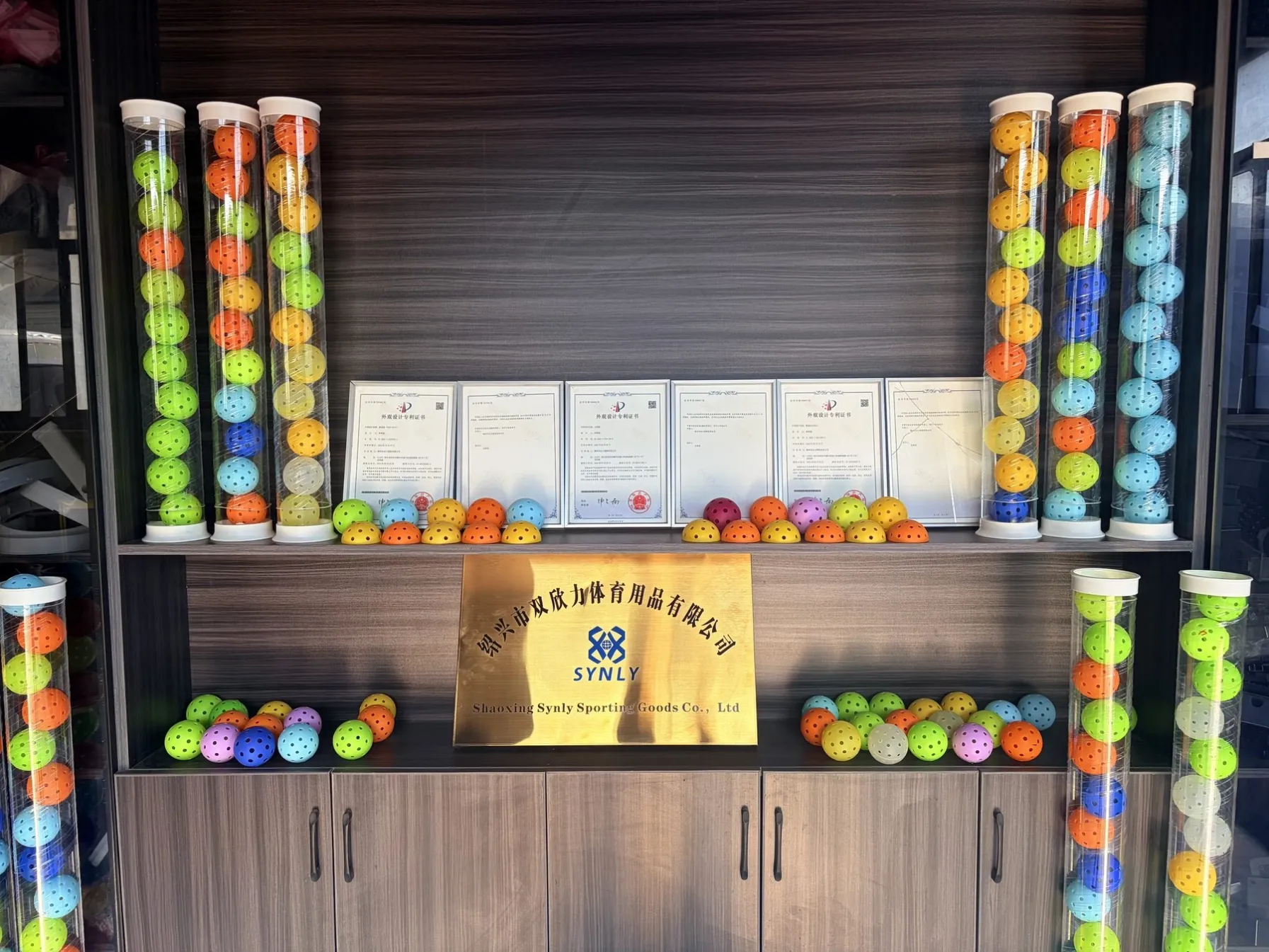
SYNLY combines long-term injection-molding experience with pickleball product development. We discuss the application first, then help buyers compare materials, prototypes, testing methods, customization and production controls. Small-batch evaluation, sample testing, private-label development and export logistics can be discussed according to the project.
Our goal is not to sell one generic ball to every customer. It is to turn the buyer's performance target into a specification that can be tested and reproduced.
Frequently Asked Questions
What should a club test before buying pickleballs in bulk?
Test multiple balls for weight, diameter, roundness, bounce consistency, repeated-impact durability, temperature response, visibility and flight. Also compare the production batch with an approved reference sample.
Does a 40-hole ball automatically have better quality?
No. Hole count is only one design parameter. Material formulation, wall thickness, molding accuracy, hole quality and quality control all affect performance and durability.
Is an approved sample enough for mass production?
No. The sample should be paired with written tolerances and a batch-inspection plan. Otherwise, the buyer and factory may interpret “same quality” differently.
Must every pickleball be USA Pickleball approved?
No. Approval depends on the intended market and event. A ball used in a USA Pickleball sanctioned tournament must be on the official approved list, while practice, promotional and development products may have different requirements.
Can SYNLY support private-label and small-batch evaluation?
Yes. Project feasibility depends on the specification, customization and packaging, but buyers can discuss samples and pilot quantities before committing to a larger order.
Discuss Your Pickleball Specification
If you are sourcing for a club, distributor, retailer or event, send SYNLY your target climate, application, quantity, packaging and performance priorities. We can help turn those requirements into a practical sampling and quality-control plan. Explore our current product range or contact the factory team to discuss samples and a pilot order.
Official References
• USA Pickleball Rules and Equipment Standards
• USA Pickleball Approved Ball List