Pickleball Diameter Inspection: An OEM Buyer's Factory Guide
Learn how pickleball diameter inspection supports OEM sample approval, batch control and clearer supplier communication for 40-hole and 48-hole balls.
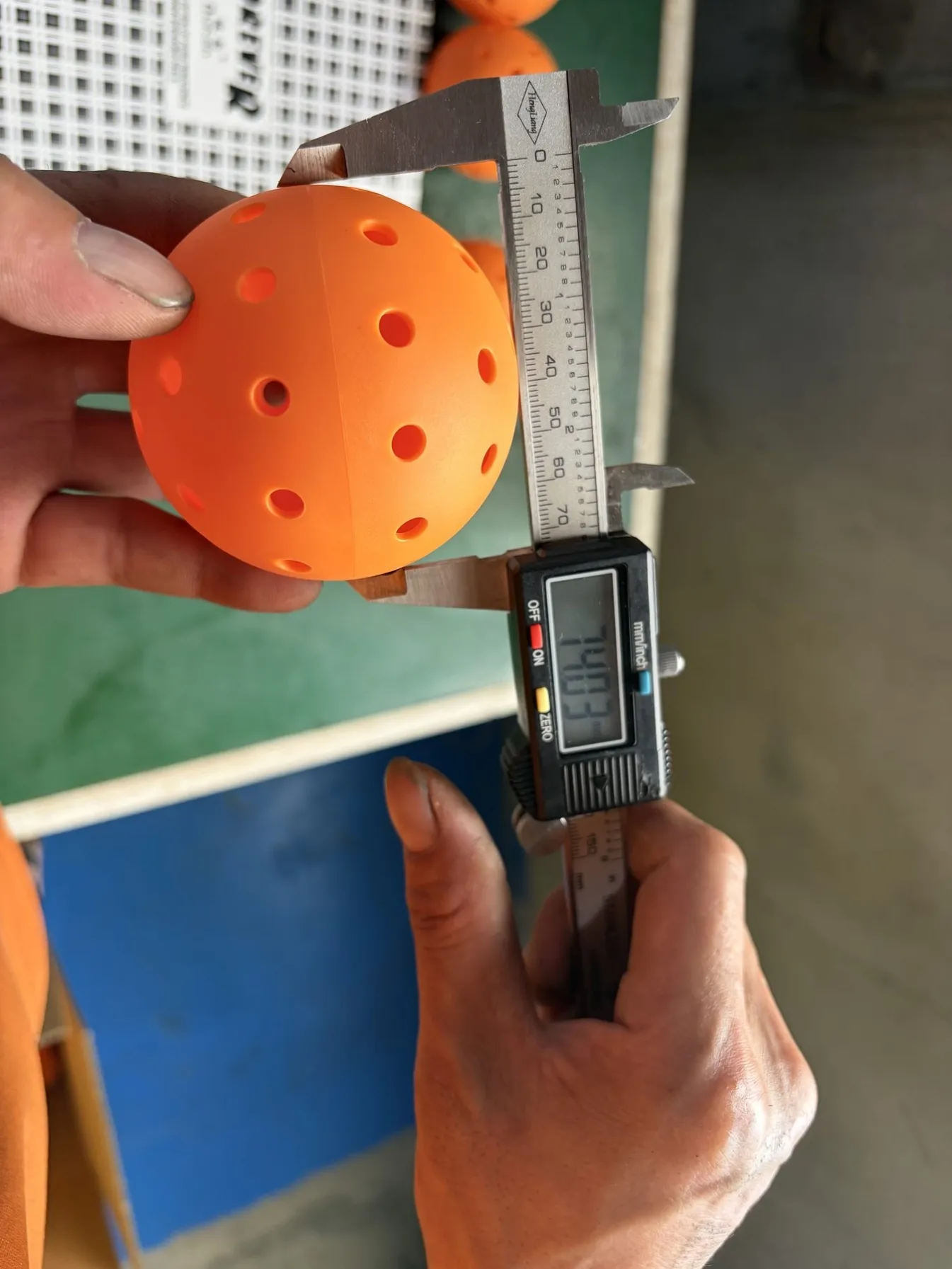
When an OEM buyer receives a pickleball sample, color and surface finish are easy to see. Diameter is less obvious, but it is one of the practical dimensions worth checking before a sample becomes a bulk-order reference.
A digital caliper reading does not prove overall ball quality by itself. It does, however, give buyers and factories a shared number for discussing sample consistency, tooling condition and inspection records.
What does pickleball diameter inspection tell a buyer?
Diameter inspection confirms whether a measured ball matches the agreed product specification at the time of checking. Used together with weight, roundness, hole layout, bounce and durability tests, it helps turn a visual sample into a documented approval standard.
A useful inspection record should identify the product model, color, production or sample date, measuring tool, reading method and result. One photo is evidence of a check, not evidence that every ball in a batch was measured.
Why diameter consistency matters in OEM production
Small dimensional differences can signal variation in molding, cooling or process control. Diameter should therefore be reviewed as part of a wider quality plan rather than treated as a stand-alone marketing claim.
- Sample approval: the approved sample should have a recorded target and tolerance.
- Batch comparison: later production can be compared with the same agreed reference.
- Packaging fit: ball size affects tubes, cartons and retail inserts.
- Performance investigation: when flight, bounce or roundness differs, dimensional records help the factory investigate possible causes.
How a factory should carry out the check
The exact inspection plan depends on the ball design and buyer requirement, but a clear process usually includes four steps.
1. Confirm the written specification
Before measuring, buyer and supplier should agree on the target diameter, allowable tolerance, ball model and test condition. Requirements for a recreational product may differ from those for an event or regulated market.
2. Use an appropriate measuring tool
A digital caliper can provide a quick dimensional reading. The tool should be suitable for the tolerance being checked and handled without deforming the ball. Buyers can ask how the tool is maintained or verified.
3. Check more than one orientation
A single reading may miss an out-of-round condition. Measuring across multiple orientations and comparing the results gives a more useful picture of the sample.
4. Record and respond to variation
The factory should define what happens when a result falls outside the agreed range: recheck, isolate the sample, inspect the process and confirm corrective action before shipment.
Questions OEM buyers can ask before approving samples
- What target diameter and tolerance will be written into the specification?
- How many samples will be checked during sample approval and bulk production?
- Are readings taken in more than one orientation?
- Will the report identify the ball model, color, batch and date?
- What other checks are paired with diameter inspection?
- How will out-of-tolerance results be handled?
These questions are more useful than asking only whether a factory does quality control. They define what will be checked, how it will be recorded and what action follows a failed result.
40-hole and 48-hole pickleballs need product-specific approval
Hole count does not replace a complete product specification. A buyer should approve each design according to its intended use, material, weight, diameter, hole geometry, color and performance target.
SYNLY's 48-hole pickleball is available for bulk production and can be customized in different colors. Final specifications, MOQ, branding, packaging and lead time are confirmed for each project. Buyers responsible for sanctioned events or regulated sales should separately verify any approval required for their intended market; SYNLY does not present diameter inspection as certification.
What current factory photos can—and cannot—prove
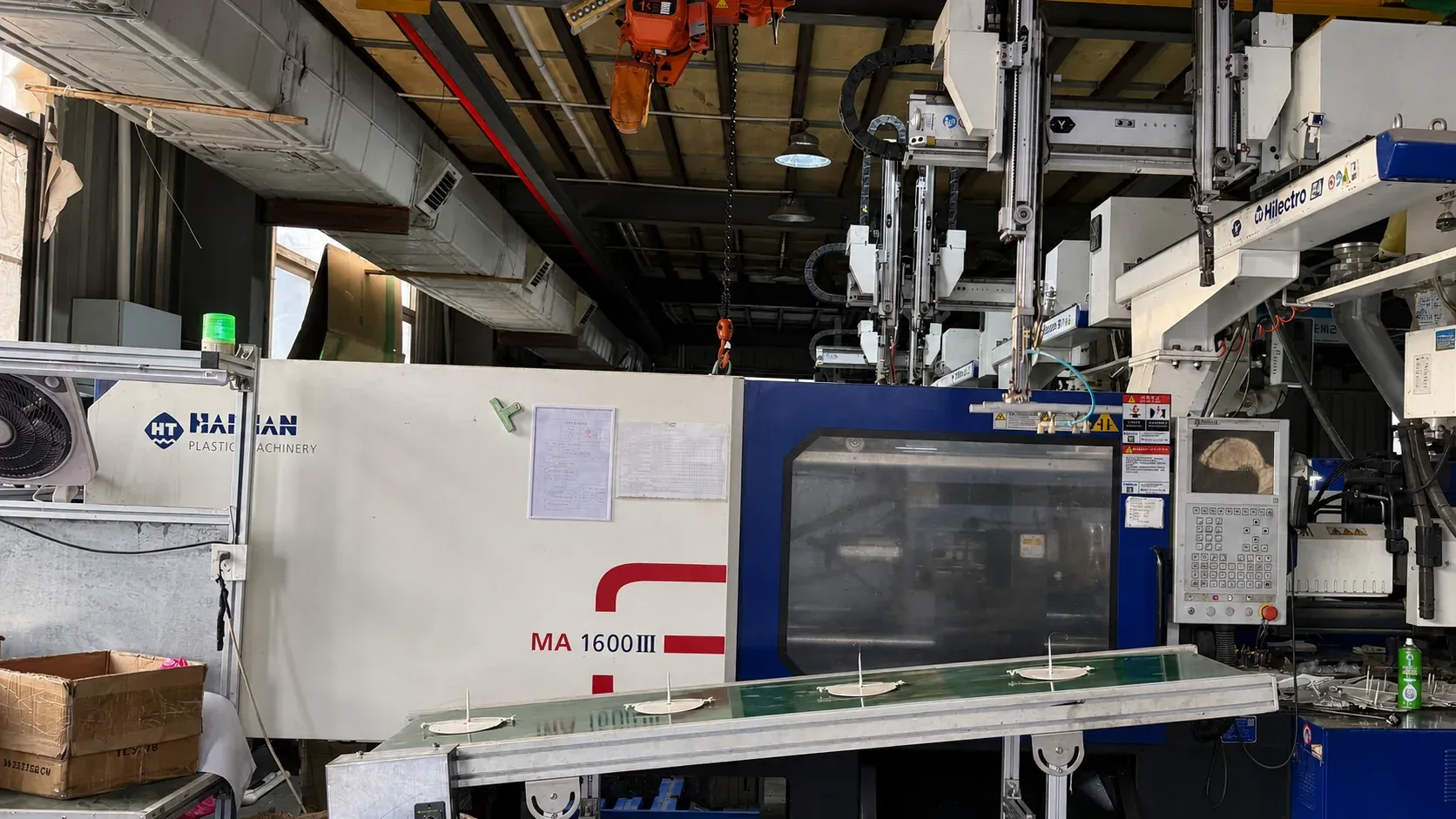
Current photos of injection-molding equipment, production areas, material storage, sample displays and dimensional checks help buyers understand the supplier's real working environment. They are useful starting evidence, but serious sourcing decisions should also use written specifications, sample testing, batch records and clear change-control terms.
For a broader review, see About SYNLY's manufacturing background, the 48-hole pickleball product page and our pickleball sample testing guide.
FAQ
Is one diameter reading enough to approve a pickleball?
No. A single reading is only one data point. Buyers should agree on sample quantity, measurement orientations, tolerance and related checks.
Does diameter inspection guarantee bounce or durability?
No. Diameter is one dimensional check. Bounce consistency, roundness, weight, hole layout and durability need separate evaluation.
Should buyers set the same tolerance for every pickleball?
Not automatically. The tolerance should match the product design, intended use and applicable buyer or market requirements.
Can 48-hole pickleballs be customized by color?
Yes. SYNLY's 48-hole ball is available for bulk production with color customization. Project details are confirmed before sampling and production.
Start with a measurable RFQ
Send your intended use, ball design, target specifications, color, quantity, testing needs and packaging requirements through the SYNLY contact page. We can then define a sample and inspection plan that is specific enough to evaluate.