Aug 24, 2026Pickleball Innovation
Custom Pickleball Paddle Edge Guards: An OEM Buyer's Guide
Learn how to specify a custom pickleball paddle edge guard, including fit, coverage, color, weight, sample approval, inspection, and OEM questions.
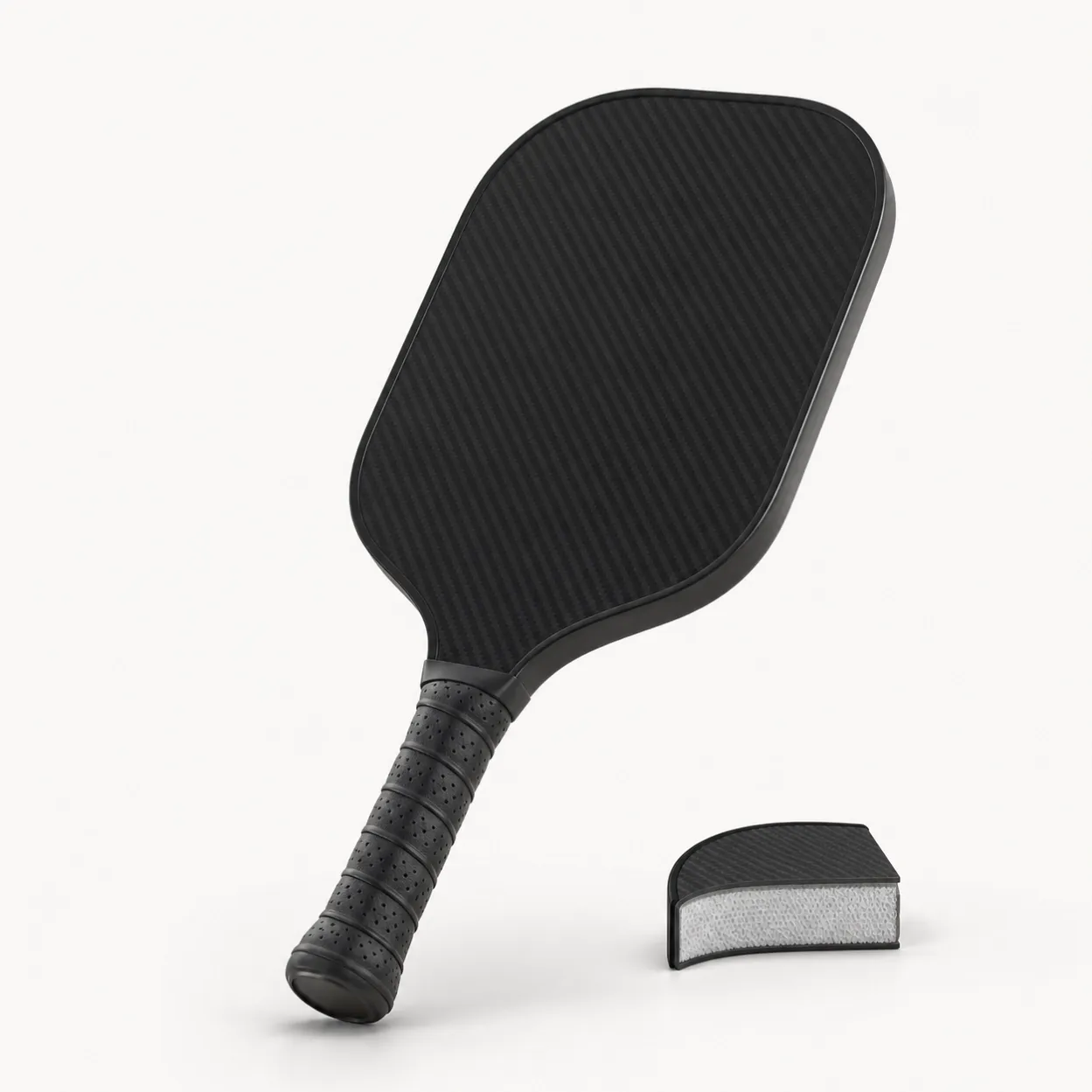
An edge guard may occupy only a narrow band around a pickleball paddle, but it affects more than appearance. Its fit must work with the paddle shape and thickness, its color must work with the artwork, and its contribution to finished weight and balance should be considered with the rest of the specification.
For an OEM buyer, “add a black edge guard” is therefore not a complete instruction. A reproducible project needs a defined component, an approved sample, and acceptance criteria that both buyer and supplier understand.
This guide explains the decisions to make before approving a custom edge-guarded paddle for production.
What is a pickleball paddle edge guard?
A pickleball paddle edge guard is a perimeter component used on many paddle constructions. Depending on the product design, it can cover and protect the paddle edge, create a finished perimeter appearance, and help manage how the edge interfaces with the face and core assembly.
An edge guard should be evaluated as part of the complete paddle. Shape, thickness, component profile, attachment method, joint, artwork, grip, and target finished weight all interact. A component that fits one platform should not be assumed to fit another without sample verification.
Some paddles use an edgeless construction. Edge-guarded and edgeless are design choices with different appearance, manufacturing, weight, and use considerations. Buyers should select the construction that fits the product brief rather than treating either choice as automatically superior.
1. Define the intended product before selecting the component
Start with the player, price position, intended use, and retail presentation. Tell the supplier whether the paddle is intended for recreational retail, club use, coaching, promotional programs, or another defined use case.
The initial brief should include:
- target player and use case;
- paddle construction, shape, nominal thickness, and dimensions;
- desired finished-weight range and balance priority;
- artwork concept and color palette;
- target market and any model-specific approval requirement;
- order quantity, packaging, destination, and launch schedule;
- whether an existing ODM platform or a more customized development route is preferred.
These inputs help determine whether an existing edge-guard component can be evaluated or whether the request may require additional development. Tooling, feasibility, cost, timing, and intellectual-property responsibility must be confirmed for the exact project.
2. Specify fit, coverage, and profile
“Fits the paddle” is too subjective for repeat production. The buyer and supplier should agree on what acceptable perimeter coverage and appearance look like on the selected paddle platform.
Review at least these points on representative samples:
- fit around curves, corners, and transitions;
- coverage relative to the paddle faces and edge;
- profile and visible width;
- joint position, gap, alignment, and finish;
- interaction with printed or textured face areas;
- local lifting, waves, deformation, or uneven seating;
- excess adhesive, scratches, marks, or other visible residue;
- any movement, looseness, or abnormal sound under the agreed inspection method.
The achievable standard depends on the construction and component. Use close-up photos, measured references where practical, and an approved physical sample instead of relying only on adjectives such as “tight,” “clean,” or “premium.”
3. Control color with a physical or coded reference
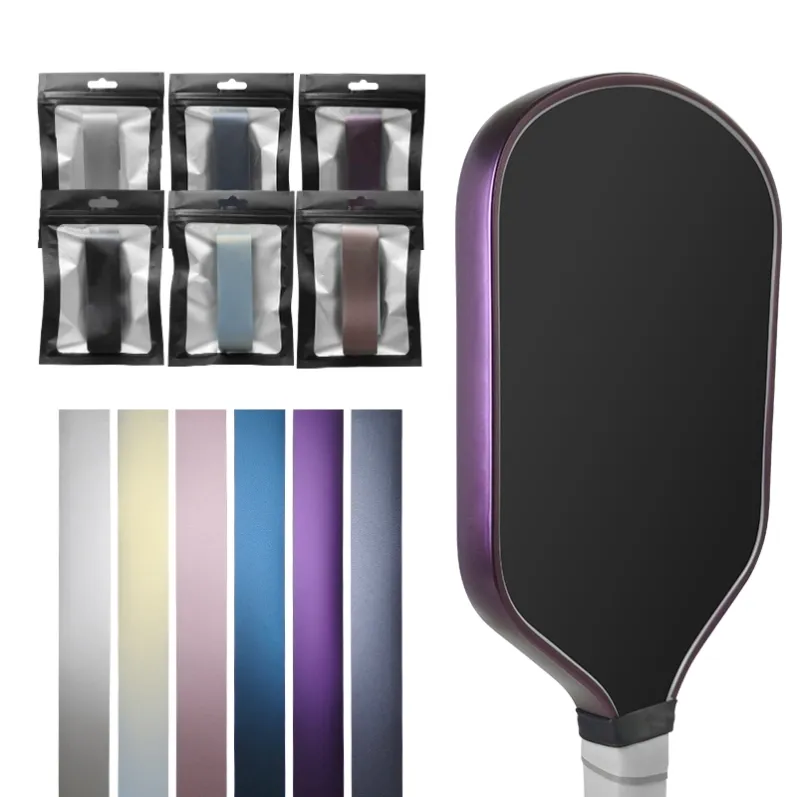
Edge-guard color can frame the face artwork, match a brand palette, distinguish product tiers, or identify a model. A screen image or informal color name is rarely enough for reliable approval.
Provide a recognized color reference, physical swatch, or approved component sample. Review the edge guard beside the real face artwork, grip, end cap, and packaging under consistent lighting. A color can appear different when surrounded by a dark graphic or a bright grip.
The specification should also state how color variation will be judged and whether surface gloss, texture, specks, flow marks, or visible joint variation are relevant to buyer acceptance. Confirm what is practical for the selected material and process before locking the standard.
4. Include edge-guard weight in the finished-paddle target
Paddle weight and balance come from the complete assembly, not one component. The edge guard, face and core construction, adhesive system, handle components, grip, end cap, and artwork can all contribute to the finished result.
OEM buyers should define a finished-paddle weight range and an agreed balance-control method when balance matters to the product. Evaluate multiple samples rather than one unusually light or heavy unit. If a component or paddle geometry changes, recheck the finished specification instead of assuming the previous weight result still applies.
Avoid publishing a narrow tolerance until the factory has confirmed that it is achievable for the exact construction and order. An unrealistic tolerance can create cost and rejection risk without producing a meaningful improvement for the intended user.
5. Protect the artwork at the perimeter
Face artwork and the edge guard must be designed together. Important logos, model names, regulatory text, or visual details should not be placed so close to the perimeter that normal component coverage or manufacturing variation hides them.
Before sample production:
- use the correct artwork template and revision;
- mark safe areas and expected edge-guard coverage;
- confirm color and logo references;
- review left/right orientation and front/back artwork;
- generate a production sample using the selected construction;
- approve the assembled appearance, not only a flat digital proof.
If the paddle shape, thickness, face treatment, or edge-guard profile changes, review the artwork fit again.
6. Approve representative samples
A visual rendering helps with early communication, but it does not prove physical fit. The approval stage should include representative assembled samples made to the current specification.
Record the sample identity, date, revision, component reference, artwork revision, and any accepted deviations. Where practical, retain a matched approved sample with both buyer and supplier. Evaluate more than one unit so a single favorable sample is not mistaken for repeatable production.
Buyer feedback should be specific. For example, “joint gap differs from approved sample” or “logo is partly covered at the upper corner” is more actionable than “the finish looks wrong.” When a change is approved, issue a new revision rather than relying on scattered chat messages.
7. Define production and pre-shipment checks
The exact control plan depends on the chosen paddle construction and SYNLY’s confirmed production workflow. A buyer can ask the supplier to explain which checks occur during assembly and which are performed on finished goods.
Potential inspection points include:
- correct model, component, color, and artwork revision;
- perimeter seating and coverage compared with the approved sample;
- joint appearance and position;
- visible lifting, deformation, scratches, residue, or damage;
- finished weight and other agreed dimensions;
- packaging protection so the edge and face are not damaged in transit;
- random sampling across the batch rather than checking only one convenient carton.
Before the order, define the sample size or inspection method, defect categories, and response to a failed result. Do not describe these recommended checks as current factory practice until operations confirms and documents them.
8. Plan for repeat orders and controlled changes
Repeat-order consistency depends on revision control. Keep the approved artwork, component reference, color reference, physical sample identity, inspection criteria, and order revision together.
Require review before substitutions or changes that could affect fit, appearance, weight, assembly, packaging, or model-specific approval. A component with the same general description may not produce the same finished result.
If an issue appears after delivery, record the model revision, order or batch reference, photos, affected quantity, packaging condition, and when the issue was observed. Clear evidence makes it easier for buyer and supplier to separate isolated damage from a recurring specification or process concern.
Questions to ask an OEM paddle supplier
- Which edge-guard options are compatible with the selected paddle platform?
- What paddle dimensions and files are required to evaluate fit?
- Is an existing component suitable, or could new development or tooling be required?
- How will color and joint appearance be approved?
- How does the component choice affect finished weight and artwork safe areas?
- How many representative samples should be reviewed before production?
- Which perimeter checks are performed during production and before shipment?
- How are component substitutions and repeat-order revisions controlled?
Clear, project-specific answers are more useful than broad material or durability claims.
Discuss your custom paddle specification
If you are planning an edge-guarded OEM pickleball paddle, send the intended player, paddle shape, construction and thickness, target finished weight, edge-guard color or reference, artwork, quantity, packaging, destination market, and launch schedule.
SYNLY can review the brief and discuss an appropriate feasibility and sample path. Available components, tooling, tolerances, pricing, lead time, approval status, and production schedule must be confirmed for the exact model before an order is placed.
CTA button: Request an Edge-Guard Feasibility Review
FAQ
What information is needed to customize a pickleball paddle edge guard?
Provide the paddle platform or dimensions, shape, thickness, desired coverage and profile, color reference, target finished weight, artwork, quantity, packaging, market, and schedule. The supplier should confirm which inputs and files are required for the exact construction.
Can one edge guard fit different paddle shapes and thicknesses?
Do not assume compatibility. Curves, corners, thickness, dimensions, and component profile can change the fit. Approve representative assembled samples for each intended platform or documented compatible group.
Does an edge guard affect paddle weight and balance?
It can contribute to the finished paddle’s weight distribution, but the result depends on the complete assembly. Set and verify finished-product targets rather than evaluating the edge guard in isolation.
How should edge-guard color be approved?
Use a recognized color reference, physical swatch, or approved component sample. Review it with the real paddle artwork, grip, end cap, and packaging under consistent lighting, then record the approved revision.
What should buyers inspect on an edge-guarded paddle?
Checks may include perimeter seating, coverage, joint appearance, alignment, lifting, deformation, scratches, residue, movement, finished weight, artwork interaction, and packaging protection. The exact criteria should be agreed for the chosen construction.
Is an edge-guarded paddle always more durable than an edgeless paddle?
No broad claim should be made from that feature alone. Durability depends on the complete design, materials, assembly, use, impact, and test conditions. Compare representative samples and model-specific evidence.